

How to Organize Your Lingerie Drawer for Easy Daily Access
Last Updated: November 4, 2026
Quick Summary
To organize your lingerie drawer, empty everything out and sort each piece into keep, repair, or let go, so the drawer holds only what fits today. Then store bras by style, with molded cups flat or upright and never folded in half, and give underwear its own compartments.
- Set aside 45 minutes to an hour for the full clean-out and drawer wipe-down.
- Close every hook-and-eye clasp before storage so hooks do not catch on lace or mesh.
- Never fold a molded or padded cup in half, even briefly, because foam can crease permanently.
- Keep no more than three or four molded bras in a pile to protect the cup curve.
- Use a weekly two-minute refold and a monthly check for unworn pieces to keep the drawer tidy.
Table of Contents
- Start With a Full Drawer Clean-Out
- How to Store Bras So They Keep Their Shape
- Choosing a Lingerie Drawer Organizer That Fits Your Space
- Is a Honeycomb Drawer Organizer Right for You?
- How to Organize an Underwear Drawer Without the Mess
- Keeping Your Lingerie Drawer Tidy Week After Week
- Find Your Next Favorite Piece at Lingeriemagic
- Frequently Asked Questions
Start With a Full Drawer Clean-Out
A cluttered lingerie drawer is rarely a storage problem. It is a decision problem.
This guide walks through the whole process, from the empty-everything stage to a simple weekly routine that keeps the drawer tidy.
Set aside 45 minutes to an hour. Pull out every item, wipe down the empty drawer, and sort into three piles: keep, repair, and let go.
Empty Everything and Sort Into Keep, Repair, and Let Go
Take every piece out of the drawer and lay it on the bed. Seeing the full pile is the moment most women realize they own far more than they wear. Then sort each item into one of three piles:
- Keep: fits well, feels comfortable, worn in the last six months
- Repair: loose hooks, stretched straps, a small tear worth fixing
- Let go: wrong size, uncomfortable, worn out, never worn
Be honest with the "let go" pile. A common mistake is keeping a bra that digs in or slips, thinking it will get better. It will not.
Before deciding what to repair, it helps to understand why lingerie falls apart in the first place. Why lingerie loses its shape and how to care for it covers the wear patterns, fabric strain points, and washing habits that shorten a garment's life.
Textile care guidance from the American Cleaning Institute notes that elastic and delicate fabrics break down faster with heat and rough washing, which explains why some pieces wear out long before their time.
Disposing of Old Lingerie Responsibly
Throwing worn lingerie in the bin is the easy option, but it is not the only one. Bras and underwear in decent condition can go to textile recycling programs or charity collections that accept used clothing.
Some brands run take-back schemes for old bras, so check local textile recycling points before binning anything. Cut up items too worn to donate and use them as cleaning rags rather than sending them to landfill.
If the keep pile includes delicate pieces that need protection from here on, the best laundry bags for delicate lingerie explains which bag styles suit lace, silk, and structured bras so the pieces that survive the clean-out stay intact.
How to Store Bras So They Keep Their Shape
The best way to store a bra depends on its construction. A molded T-shirt bra and a soft lace bralette do not fail in the same way, so they should not be stored the same way. The goal is to protect the cup curve, the elastic, and the wire channel without crushing or stretching any of them.
Start with three universal rules. Close every hook-and-eye clasp before storage so the hooks do not catch on lace or mesh. Keep straps loose rather than twisted or knotted, because tight straps stretch the elastic and pull the cups out of alignment. And never fold a molded or padded cup in half, even briefly, because the foam or padding can crease and stay creased.
Molded-Cup and T-shirt Bras
Molded cups hold their shape best when stored flat or standing upright, cup to cup. Nest two or three together with the cups aligned, then place them in a drawer section wide enough that the cups are not compressed.
Watch out: stacking molded bras under heavy items like jeans or sweaters can flatten the cup curve permanently, so give them their own section or the top layer of the drawer.
Underwire Bras
Underwire bras need support at the base of the cup so the wire does not bend or poke through the channel. Store them flat with the cups nested, or stand them upright in a compartment that holds the band straight. Do not fold the underwire itself, and do not hang them by the straps, which stretches the band and distorts the wire.
Wireless and Soft-Cup Bras
Wireless bras and soft-cup styles are more forgiving but still lose shape if crushed. Nest them gently in a row, cup inside cup, and keep them away from hooks, zippers, and anything with a rough edge. Lace and mesh soft-cup bras can snag, so store them in a fabric divider or a small mesh bag inside the drawer rather than loose next to hardware.
Delicate and Lace Bras
Delicate bras made of lace, silk, or fine mesh should be stored so nothing presses hard against the embroidery or trim. Nest them loosely, do not overfill the compartment, and keep them separate from molded cups that could press into the lace. If the drawer is shared with other items, a soft fabric pouch or a dedicated section for delicates prevents snags and stretching.
Sports and Strapless Bras
Sports bras can be rolled and stacked in their own section because the fabric is designed to recover.
A common mistake is treating every bra the same and stacking them all in one tall pile. If you are unsure whether a bra still fits, how to find bra size without a tape measure walks through a tape-free sizing method.
Match the storage method to the bra style so cups, wires, and elastic stay intact.
| Bra style | How to store | Watch out for |
|---|---|---|
| Molded-cup and T-shirt bras | Flat or upright, cup to cup; no more than three or four in a pile | Stacking under heavy items flattens the cup curve |
| Underwire bras | Flat with cups nested, or upright with band straight | Folding the wire or hanging by straps |
| Wireless and soft-cup bras | Nest gently in a row, cup inside cup | Hooks, zippers, and rough edges snagging lace |
| Delicate and lace bras | Nest loosely in a fabric divider or soft pouch | Overfilling the compartment |
| Sports and strapless bras | Roll and stack sports bras; store strapless flat with straps removed | Detachable straps tangling or going missing |
Choosing a Lingerie Drawer Organizer That Fits Your Space
The right lingerie drawer organizer depends on drawer depth, width, and what you store. Measure the inside of the drawer before buying anything. A divider that does not fit wastes the very space it was meant to save.
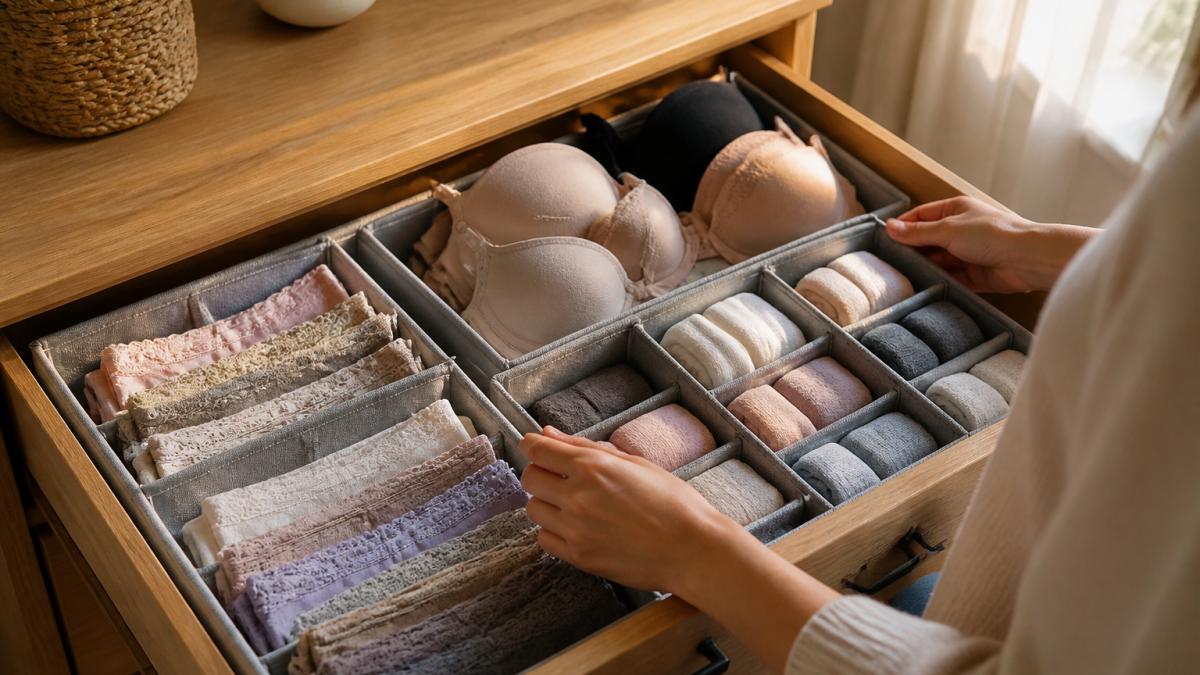
Match the organizer to the drawer:
- Shallow drawers: use low dividers or a drawer insert with small compartments for underwear and socks
- Deep drawers: stack two shallow organizers or use one with tall compartments for bras
- Narrow drawers: choose a single-row divider rather than a wide grid
Clear containers and storage boxes work well for items worn less often. A clear container lets you see contents at a glance, which stops the "out of sight, out of mind" pile from forming.
If the drawer is being refilled with new pieces, it pays to know which fabrics and construction details last. The high quality lingerie fabric guide breaks down what to look for so the next purchase earns its place in the drawer.
Is a Honeycomb Drawer Organizer Right for You?
A honeycomb drawer organizer is a grid of connected hexagonal cells that keeps socks, underwear, and rolled items separated.
The honeycomb design has real strengths:
- Cells hold rolled underwear and socks upright for easy access
- The grid stops items from sliding into one pile
- It uses drawer depth well in shallow drawers
It has limits too. Honeycomb cells are usually too small for bras, so keep bras in a separate flat section or a divider with larger compartments.
Best for: socks, underwear, and rolled camisoles in shallow to medium drawers. Skip if: the drawer is deep, or most of the space needs to hold structured bras.
How to Organize an Underwear Drawer Without the Mess
An organized underwear drawer uses one simple rule: one section per category, with items folded or rolled so each piece is visible. Panties, socks, and shapewear each get their own compartment.
Sort by category first, then by color or use. Everyday cotton in one section, lace and occasion pieces in another, socks in a third. This layout makes the morning routine faster because the hand goes straight to the right compartment.
Folding Underwear to Save Space
Folding, not stuffing, is what saves drawer space. Two methods work well:
- The roll: fold panties in half, tuck the waistband, and roll into a compact cylinder. Rolls stand upright in a compartment and stay visible.
- The file fold: fold in thirds into a small rectangle, then stand each piece upright like a file. This works well in shallow dividers.
Both methods let you see every piece at a glance, which stops the "dig through the pile" habit. Keep the folds loose so elastic is not stretched under pressure.
Keeping Your Lingerie Drawer Tidy Week After Week
A tidy drawer stays tidy only with a small, repeatable routine. The system does not need to be complex, but it does need a clear place for clean items, lightly worn pieces, and delicates awaiting washing so nothing mixes back into the clean sections.
A Simple Weekly and Monthly Reset
Try this rhythm, which most practitioners find takes less than five minutes a week once the drawer is set up:
- Daily: put clean pieces back in their assigned section, not on top of the pile.
- Weekly: spend two minutes refolding anything that has shifted and returning stray socks or underwear to their compartments.
- Monthly: pull out anything unworn in the past month and move it to the let-go pile or a separate storage box.
A monthly reset is also the moment to check bras for bent wires, stretched bands, or hooks that have lost their grip. It is also a good time to deal with marks on delicate pieces, and how to remove stains from silk lingerie safely explains the safe approach. Catching those early prevents a favorite bra from failing mid-week.
Clean, Worn, and Delicates: Separate Zones
The biggest cause of drawer chaos is mixing clean and worn items. Set up three zones inside or next to the drawer:
- Clean daily section: the main compartments for ready-to-wear bras, underwear, and socks.
- Worn basket: a small basket or a dedicated drawer compartment for lightly worn pieces that can be worn again before washing.
- Laundry bag: a mesh bag for delicates awaiting washing, kept separate so hooks do not snag clean lace.
This separation keeps the clean sections fresh and makes laundry day faster because everything that needs washing is already gathered. It also stops the common habit of sniff-testing and second-guessing whether a piece is clean.
Adapting the Routine to Your Drawer and Living Situation
The same routine works in different drawers with small adjustments:
- Shallow drawers: use low dividers and keep the weekly refold focused on standing items upright so they do not slide flat.
- Deep drawers: stack two shallow organizers and check the lower layer monthly so items do not disappear underneath.
- Small apartments or shared storage: keep a single portable organizer tray that can be lifted out, and use a hanging shoe organizer or over-the-door pocket for overflow.
If mobility or reach is limited, keep the most-used items in the front compartments and the occasion pieces toward the back, so the daily routine does not require stretching or digging.
Watch out: letting the worn basket overflow into the clean section is the fastest way to undo a good system, so empty it on laundry day without exception.
Find Your Next Favorite Piece at Lingeriemagic
A well-organized drawer makes one thing obvious fast: which pieces are missing.
Lingeriemagic curates high-quality lingerie, sleepwear, and intimate apparel, with an inclusive approach to lingerie for every woman. A welcoming, stylish selection makes it easy to find everyday comfort and something special in one place.
The challenge is simple: give the drawer a reset this week, and let the empty spaces show what is actually missing.
Frequently Asked Questions
Should bras be folded or stored flat in a drawer?
Fold bras rather than storing them flat. Fold each cup inward so one cup nests inside the other, then tuck the band and straps behind. This keeps the cups from crushing under other items and holds the shape between wears. If drawer space is tight, stand folded bras upright in a row so you can see each one. Storing bras flat under heavier clothing flattens the cups over time, especially on molded and padded styles.
How do I keep bras from losing their shape in a drawer?
Give structured bras their own compartment and never stack anything on top of them. Nest molded and padded bras cup-to-cup, and store lace or unlined bras flat or rolled in a separate section so wires and straps do not tangle. Rotate what you wear rather than leaving the same bra compressed at the bottom. A drawer divider or a dedicated bra section in your lingerie drawer organizer prevents the pile-up that flattens cups.
What can I use to organize a lingerie drawer without buying anything?
Shoe boxes, small gift boxes, and clean food containers can act as drawer compartments for socks, underwear, and bras. A shallow box lid works as a tray for rolled underwear. Before buying a lingerie drawer organizer, measure your drawer and test a cardboard layout first so you know which compartment sizes actually fit. Once you know the layout, a fabric or honeycomb organizer is easier to choose.
How can I declutter my underwear drawer quickly?
Tip the whole drawer onto the bed and sort into three piles: keep, repair, and let go. Let go of anything with stretched elastic, broken wires, or holes, plus anything you have not worn in a year. Keep only pieces that fit well and feel comfortable. Wipe the empty drawer, add a divider, and put the keep pile back by category. The whole reset takes about 20 minutes and makes the drawer easier to maintain.

How Do You Stop Bra Straps Slipping Off Your Shoulders?
How to Choose Lingerie for Pear Shaped Women
Related Posts

Best Underwear for Sheer Lace Bodysuits?

How to Choose the Right Nightgown Size

How to Measure Bra Size Accurately at Home and Online

Lingerie Sets for Wedding Night: 7 Picks Compared

Why Choose Sustainable Intimate Apparel: A Practical Buying Guide

How Do You Size a Bra for a Lace Bodysuit?

7 Silk Lingerie Sets for Everyday Wear That Last
