

Best Laundry Bags for Delicate Lingerie: 2026 Guide
Table of Contents
- Why Delicate Lingerie Needs a Dedicated Laundry Bag
- How to Choose a Delicates Laundry Bag That Lasts
- Finding the Best Laundry Bag for Bras and Structured Lingerie
- How to Wash Bras in a Washing Machine Without Ruining Them
- Durability and Environmental Impact: What Most Guides Skip
- Common Mistakes That Damage Delicates (and How to Avoid Them)
- Frequently Asked Questions
Last Updated: October 5, 2026
Why Delicate Lingerie Needs a Dedicated Laundry Bag
A mesh laundry bag is one of the cheapest pieces of insurance a wardrobe can hold, it costs less than a single replacement bra and prevents damage that shortens a garment's life by months. This guide explains what to look for in laundry bags, how to match bag size to garment type, and which construction details separate a bag that lasts years from one that splits after a handful of washes.
The Hidden Damage Inside Every Wash Cycle
A washing machine is a tumbling drum of wet fabric, metal hardware, and spinning water. Delicate fabrics like silk, cashmere, and fine lace are not built to survive that unprotected: hooks catch lace, underwire tips work loose, and tights and knits stretch out of shape.
The damage is rarely dramatic, a pulled thread, a stretched strap, a clasp that no longer sits flat. Over time those small failures add up to a garment that looks worn out long before it should.
What a Mesh Laundry Bag Actually Prevents
A delicates bag creates a physical barrier between fragile items and the rest of the load. Garments still get cleaned by water and detergent, but they stop tangling with zippers, buttons, and heavier fabrics.
The barrier effect matters most for structured pieces: bras keep their shape when not crushed under towels, and hooks cannot grab delicate knits and tights mid-cycle.
How to Choose a Delicates Laundry Bag That Lasts
A good delicates laundry bag balances three things: mesh grade, closure quality, and seam construction. Get those right and the bag outlasts most of the garments it protects; get them wrong and you will replace it every few months.
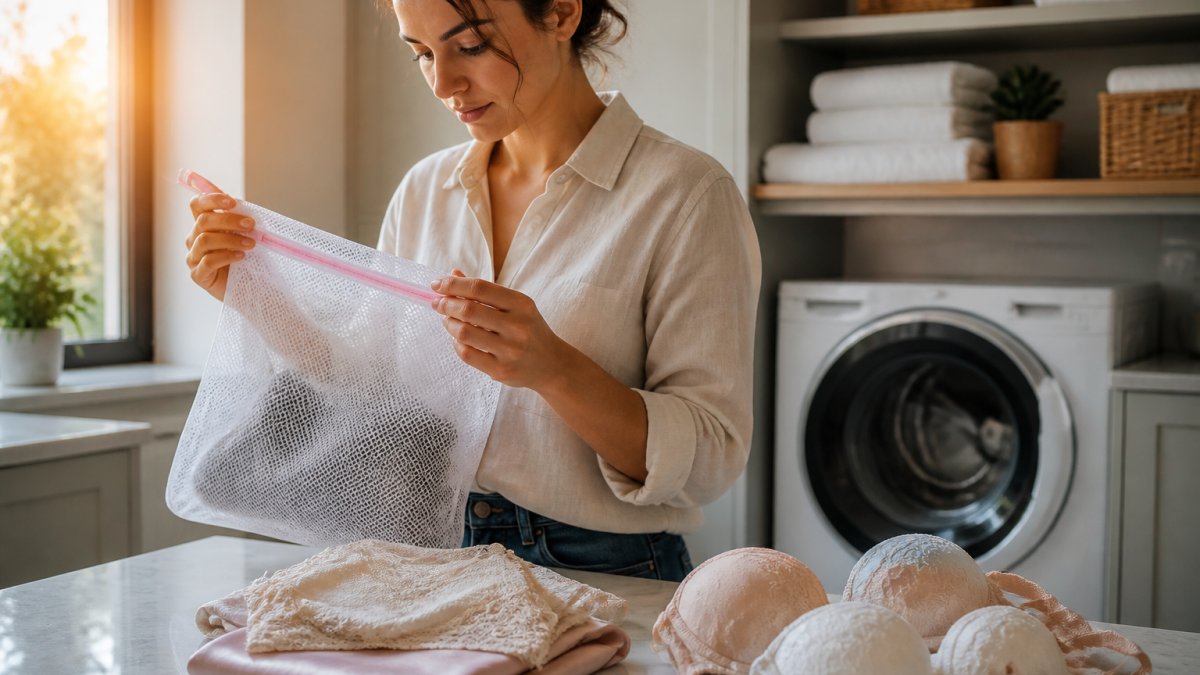
Mesh Grade, Zipper Quality, and Seam Construction
Mesh fabric comes in different grades. Fine mesh protects delicate fabrics without letting small items slip through; coarser mesh lets more water flow but offers less snag prevention for lace and silk.
Look for these construction details:
- Zipper closure with a protective tab: A covered zipper stops metal teeth from snagging other garments in the load.
- Rust-resistant hardware: Cheap zippers corrode and stain light-colored fabric. This is a common complaint that most guides skip.
- Reinforced seams: Double-stitched edges resist the pulling force of a full wash cycle.
What most guides miss is that the zipper, not the mesh, usually fails first. A bag with a broken zipper is useless even if the mesh is intact.
Sizing for Bras, Tights, and Swimsuits
Bag size should match the garment. An oversized bag lets items tumble freely, reducing the protection you paid for; an undersized bag crushes structured pieces and stretches knits.
- Small bags: Best for individual bras, structured lingerie, and underwire pieces that need to hold their shape.
- Medium bags: Suit tights, socks, underwear, and swimsuits.
- Large bags: Handle sweaters, activewear, and multiple lightweight items at once.
A common mistake is buying one large bag for everything. Multiple sizes give better garment separation, the whole point of using a bag.
| Bag Size | Best For | Typical Capacity | Watch Out For |
|---|---|---|---|
| Small | Bras, structured lingerie | 1-2 bras | Overstuffing crushes cups |
| Medium | Tights, socks, swimsuits | 3-5 items | Small items can slip through coarse mesh |
| Large | Sweaters, knits, activewear | 1-2 bulky items | Too much free movement inside |
Finding the Best Laundry Bag for Bras and Structured Lingerie
The best laundry bag for bras is a small, fine-mesh bag with a covered, rust-resistant zipper and reinforced seams.
Fit matters more than most shoppers expect.
Wash one or two molded or underwire bras per bag; a medium bag holds several soft-cup or bralette styles. Keep swimsuits and tights separate so straps do not tangle and knit fibers do not snag.
How to Wash Bras in a Washing Machine Without Ruining Them
Washing bras in a machine is safe when the garment is bagged, the cycle is gentle, and the load is balanced. But "gentle cycle" is not a complete instruction, water temperature, detergent type, machine type, and drying method decide whether a bra survives.
Step-by-Step: The Bagged-Bra Wash
- Fasten all hooks and clasps. An open hook is a snag waiting to happen, even inside a bag.
- Bag each bra individually, or pair two soft-cup bras in a medium bag. Molded and underwire bras go one per small bag.
- Choose the right cycle. Delicate or hand-wash cycle, cold water. If your machine has a spin-speed setting, choose low.
- Dose detergent correctly. A small amount of mild, pH-neutral detergent. Skip fabric softener entirely, it coats elastic fibers and breaks them down over time.
- Wash with similar lightweight items. Never with towels, jeans, or anything with zippers or hooks.
- Remove immediately after the cycle. Do not let wet bras sit in the bag.
- Reshape cups by hand and air dry. Lay flat or hang. Never tumble dry.
Water Temperature: Why Cold Is Not Optional
Heat is the single biggest threat to bra elastic and foam cups. Hot water accelerates the breakdown of spandex and elastane, fades dyes, and warps molded cups. Cold water (below 30°C / 86°F) cleans effectively with a mild detergent; pre-treat heavily soiled areas rather than raising the temperature.
Detergent and Softener: What to Use and What to Avoid
Use a mild, pH-neutral detergent formulated for delicates or hand-washing. Avoid bleach, heavy-soil enzymes, and optical brighteners, which degrade fine fibers and alter color. Fabric softener is the most common mistake: its waxy residue coats elastic and reduces stretch recovery, so bras lose shape faster. A small amount of white vinegar in the rinse is a common alternative, though unnecessary for most loads.
Machine Compatibility: Top-Load vs. Front-Load
Bagged bras behave differently depending on your machine:
- Front-load machines are generally gentler because the drum tumbles rather than agitates. A bagged bra on a delicate cycle in a front-loader is the safest common setup.
- Top-load machines with a central agitator are the harshest. The agitator can catch bag straps and pull them. If you have a top-loader with an agitator, use a mesh bag with a secure closure, keep the load small, and choose the gentlest cycle available. If your top-loader has no agitator (an impeller model), it is closer to a front-loader in gentleness.
- High-efficiency (HE) machines require HE detergent. Using non-HE detergent in an HE machine can leave residue on garments, including bras.
Drying: The Step Most People Get Wrong
Never tumble dry a bra. Heat warps molded cups, bends underwires, and shrinks elastic. Reshape the cups by hand while damp, then lay the bra flat on a towel or hang it by the band (not the straps, which stretch). Air drying in a well-ventilated area is the only method that preserves shape and elastic; to speed it up, point a fan at the garment rather than using heat.
Durability and Environmental Impact: What Most Guides Skip
Most laundry bag roundups call a bag "durable" and move on. Durability is measurable: where a bag fails, how many wash cycles it survives, and how often you replace it.
Where Laundry Bags Actually Fail
Across user discussions and product reviews, the failure pattern is consistent: bags rarely die because the mesh disintegrates. They die at the seams and the zipper. The mesh-to-trim seam takes the most stress, and a single-stitched seam separates after repeated cycles while a double-stitched or bound seam holds.
To judge durability before buying, look at the seam where the mesh meets the fabric trim.
A Simple Wash-Cycle Test You Can Run at Home
You do not need a lab to compare two bags, just a consistent method:
- Label each bag with a permanent marker and record the start date.
- Load each bag identically, one bra or one equivalent garment per bag, so the stress is the same.
- Wash on the same cycle every time, cold water, delicate cycle, same detergent dose.
- Inspect after every 10 cycles and note: seam separation, zipper stiffness or corrosion, mesh holes, and trim fraying.
- Record the cycle number at first failure, that is the bag's useful lifespan.
A bag that fails at cycle 15 and a bag that fails at cycle 150 look identical on a product page. The test above is the only way to tell them apart without trusting marketing copy. The difference between a cheap bag and a well-made one shows up between the 10th and 30th wash, not on day one.
Replacement Frequency Is the Real Cost Metric
A cheap bag that splits after ten washes is not a bargain if you replace it twice a year:
- Cheap bag, fails at ~10 cycles, replaced twice a year: two bags per year, every year.
- Well-made bag, lasts 3-5 years with basic care: one bag every three to five years.
Over five years, the well-made bag wins on cost and waste. The purchase price is the least important number; cost per year of protection is driven entirely by seam and zipper construction.
The Environmental Case, Stated Honestly
A reusable mesh bag replaces disposable alternatives and keeps microfibers and small items out of the drum and drain. But a bag that fails after ten washes and gets thrown away is worse for the environment than one that lasts five years, because the manufacturing footprint is repeated.
Repairability matters too. A bag with a broken zipper can sometimes be re-zippered or hand-stitched at the seam, extending its life by years; a bag with a torn mesh panel usually cannot.
Care label guidance for delicate fabrics and washing temperatures
Common Mistakes That Damage Delicates (and How to Avoid Them)
Most delicate garment damage comes from a short list of avoidable habits. Fixing them costs nothing and adds months or years to the life of bras, tights, and swimsuits.
| Mistake | What Happens | The Fix |
|---|---|---|
| Overstuffing the bag | Items crush and stretch | Match bag size to garment count |
| Using hot water | Elastic breaks down, colors fade | Wash on cold, delicate cycle |
| Adding fabric softener | Elastic and mesh degrade | Skip softener, use mild detergent |
| Leaving garments in the bag after washing | Mildew and set-in odors | Remove and air dry immediately |
| Mixing delicates with towels | Snags, tangles, and abrasion | Wash delicates in their own load |
| Tumble drying bras | Cups warp, underwires bend | Always air dry |
The pattern behind all of these is the same: delicates need separation and gentle handling. A bag handles the separation; the rest is cycle choice and drying method.
Frequently Asked Questions
What is the best bag to wash delicates in?
The best bag uses fine mesh with a rust-resistant zipper and reinforced seams. Fine mesh keeps small items like socks and underwear contained while letting water and detergent flow through. Look for a bag with a protective zipper guard so the closure does not snag lace or silk. For bras, choose a structured bag with a plastic frame or multiple compartments. Matching bag size to load is recommended: a small bag for a few bras, a larger one for a full delicate load.
What is the best laundry bag for bras?
A structured bra wash bag with a semi-rigid frame or divided compartments prevents cups from crushing and straps from tangling. Look for a bag sized specifically for your cup size, since an oversized bag lets bras move freely and lose shape. Fine mesh protects lace and embroidery, while a smooth zipper guard stops hooks from snagging other garments. For underwire bras, a bag with a reinforced base adds extra protection during the spin cycle.
How do you choose a delicates laundry bag?
Start with mesh grade: fine mesh protects delicate fabrics like silk and lace, while coarser mesh suits knits and activewear. Check the zipper for a rust-resistant coating and a guard that covers the pull. Match bag size to your typical load, and choose multiple sizes if you wash different garment types. Look for double-stitched seams and washable, reusable material. A bag that survives 50 or more washes costs less over time than replacing cheap ones every few months.
Can you put a lingerie laundry bag in the dryer?
Most mesh laundry bags tolerate low-heat tumble drying, but high heat weakens mesh fibers and can warp zippers over time. Check the bag's care label first. For bras and silk, air drying is safer: it preserves elastic, shape, and fabric finish. If you use a dryer, choose the lowest heat setting and remove items while slightly damp. Never dry a bag containing underwire bras on high heat, since the wire can warp and poke through the channel.
Delicate lingerie lasts longer when it is washed with the same care that went into choosing it. Lingeriemagic builds a curated selection of intimate apparel designed to hold up to everyday wear, with durable construction and inclusive sizing across the range. Pair that with a fine-mesh bag, a cold delicate cycle, and air drying, and the pieces you love keep their shape and finish for years. Explore the collection at Lingeriemagic and find intimate apparel made to last.
Comfortable vs Seductive Lingerie: A 2026 Style Guide
Victoria Secret Alternatives for Quality: 2026 Guide
Related Posts

How to Find Accurate Bra Size Online: 2026 Fit Guide

Cosabella vs Bluebella: Lingerie Review 2026

Natural Alternatives to Chemical Fabric Softeners

Why Silk Lingerie Is Better for Your Skin: A 2026 Guide

How to Find Bra Size Without a Tape Measure

Tips for Buying Lingerie as Gifts: A 2026 Guide

How to Remove Stains from Silk Lingerie Safely
