

Why Silk Lingerie Is Better for Your Skin: A 2026 Guide
Table of Contents
- Why Silk Lingerie Is Better for Your Skin
- Silk Underwear for Sensitive Skin: What Makes It Different
- Silk vs Cotton Underwear: Which One Wins for Skin Health?
- Is Silk Underwear Breathable? Temperature Regulation and Moisture Control
- How to Wash Silk Lingerie Without Damaging the Fabric
- Momme Weight and Fabric Quality: How to Spot Real Silk
- Pros and Cons of Silk Lingerie for Everyday Wear
- Choosing the Right Silk Lingerie for Your Skin
- Frequently Asked Questions
Last Updated: October 16, 2026
Why Silk Lingerie Is Better for Your Skin
Here is the short version: silk is a protein fiber, not a plant fiber. That single fact changes how it behaves against your skin.
- Silk fibers are smooth and round, so they glide instead of grab
- Silk absorbs moisture without staying wet against the body
- Silk regulates temperature better than most fabrics next to skin
- Silk resists dust mites and common allergens
The International Sericultural Commission overview of silk fiber properties explains how the fiber's triangular structure reflects light and sheds moisture at the same time. That is why silk looks rich and feels dry.
Below, we break down exactly why silk lingerie earns its place in a sensitive-skin wardrobe, how it compares with cotton, and how to care for it so it lasts.
Silk Underwear for Sensitive Skin: What Makes It Different
Silk underwear for sensitive skin works because the fabric does not trigger the two most common sources of irritation: rough fiber edges and trapped moisture. Most skin discomfort in underwear comes down to friction and dampness, not the cut or the style.
Hypoallergenic and Naturally Gentle on Reactive Skin
Silk is naturally hypoallergenic. It contains a protein called sericin, which stays bonded to the fiber during processing and gives silk its smooth, low-irritation surface.
That matters for anyone with eczema, psoriasis, or allergy-prone skin. A common mistake is assuming "natural" always means "gentle." Wool is natural. So is hemp. Both can scratch sensitive skin. Silk does not.
- Sericin coats the fiber and reduces friction against the skin barrier
- Silk protein binds moisture without stripping natural oils
- Natural fiber structure resists dust mites, a common allergen trigger
Why Silk Helps Specific Skin Conditions, Not Just "Sensitive Skin"
Most articles stop at "sensitive skin." That is too broad to be useful. If you live with a diagnosed condition, the mechanism matters more than the marketing.
Eczema (atopic dermatitis). Eczema flares are driven by a compromised skin barrier, moisture loss, and friction.
Psoriasis. Psoriasis involves rapid skin-cell turnover and often intense itching.
Contact dermatitis and fragrance sensitivity. Silk itself is a low-allergen fiber, but the finish matters.
Intertrigo and chafing-prone skin. Skin folds trap heat and moisture, and that combination encourages irritation.
What Silk Does Not Do
Silk is not a medical treatment. It will not cure eczema or psoriasis, and anyone with an active flare should follow their dermatologist's plan. What silk does is remove several common physical triggers, friction, trapped moisture, and heat, so the skin has a better chance to settle. Think of it as removing obstacles, not adding medicine.
Lingeriemagic offers a curated selection of high-quality silk options, designed to enhance everyday experiences with a blend of convenience, style, and innovation. The goal is comfort you forget you are wearing.
Silk vs Cotton Underwear: Which One Wins for Skin Health?
Cotton wins on price and easy care. Silk wins on skin comfort, moisture handling, and temperature regulation. For most women with sensitive or reactive skin, silk is the better daily choice.
Here is how the two compare on the factors that actually matter next to your body:
| Factor | Silk | Cotton |
|---|---|---|
| Fiber type | Protein | Plant cellulose |
| Moisture handling | Absorbs and releases fast | Absorbs but dries slowly |
| Friction on skin | Very low | Moderate |
| Temperature regulation | Excellent | Moderate |
| Dust mite resistance | High | Low |
| Care difficulty | Delicate hand wash | Machine washable |
| Durability | Long with care | Shorter with frequent washing |
Cotton is not a bad fabric. It is breathable and cheap. But wet cotton clings, and clinging cotton rubs. For eczema-prone skin, that combination is the problem.
Silk releases moisture quickly, so the fabric stays dry against the body. That single difference explains most of the comfort gap.
Is Silk Underwear Breathable? Temperature Regulation and Moisture Control
Yes, silk underwear is breathable. Silk's natural fiber structure allows air to pass through while absorbing up to a third of its weight in moisture without feeling damp.
This is where silk quietly outperforms almost every synthetic fabric. Polyester and nylon trap heat and hold sweat against the skin. Silk moves moisture away and lets it evaporate.
- Warm weather: silk wicks sweat and dries fast
- Cold weather: silk insulates without bulk
- Humid climates: silk keeps the skin barrier from getting clammy
The term for this is thermoregulation. It means the fabric helps your body hold a steady temperature instead of swinging with the room.
How to Wash Silk Lingerie Without Damaging the Fabric
Washing silk lingerie correctly means hand washing in cool water with a pH-neutral detergent, then air drying flat away from direct sun. Skip the machine, skip the dryer, and skip anything labeled "enzyme" or "bleach."
Silk is a protein fiber. Enzymes in detergent are designed to break down protein. So an enzyme detergent will slowly eat your silk.
Follow this routine:
- Fill a basin with cool water and a capful of pH-neutral silk wash
- Submerge the garment and gently press it under the water for 2-3 minutes
- Do not rub, wring, or twist the fabric
- Rinse in cool water until no suds remain
- Roll the garment in a clean towel to remove excess water
- Lay flat to dry on a rack, away from sunlight and radiators
For more on fiber care standards, the American Cleaning Institute fabric care guidance covers how protein fibers respond to heat and detergents.
Momme Weight and Fabric Quality: How to Spot Real Silk
Momme weight is the standard measure of silk density, and it is the single best quality indicator you can check before buying. Higher momme means a heavier, more durable fabric.
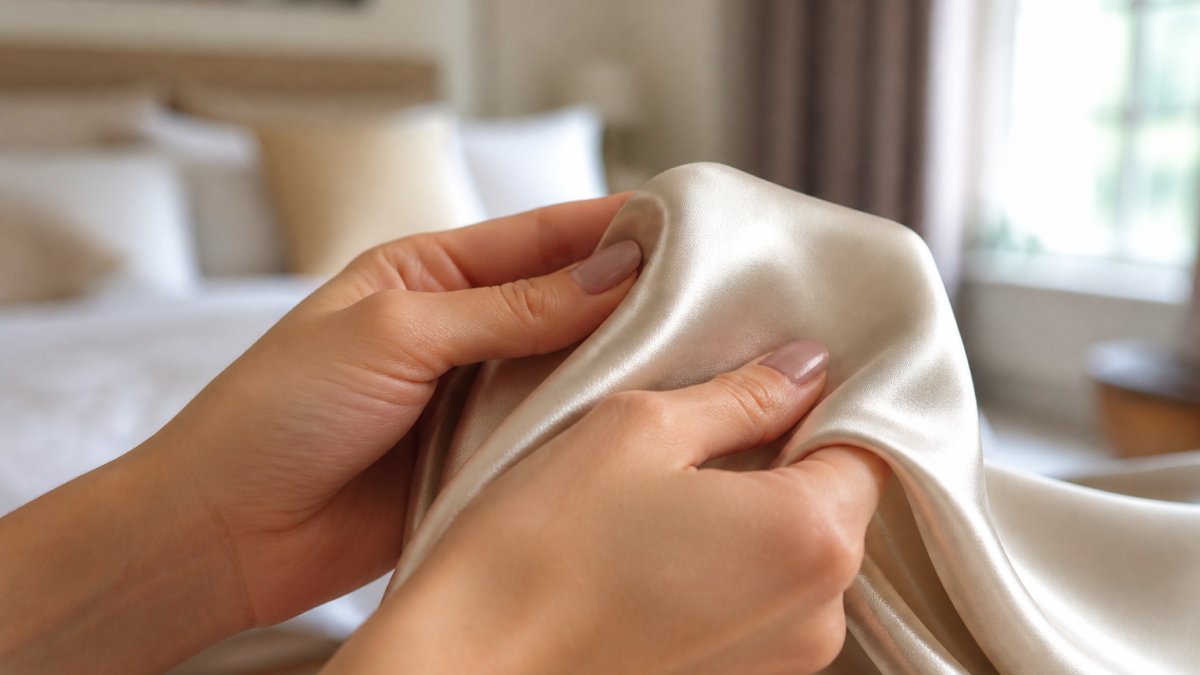
Most quality silk lingerie sits between 16 and 22 momme. Here is what each range means in practice:
- 12-16 momme: light and sheer, best for special occasions
- 16-19 momme: the sweet spot for daily wear and sleepwear
- 19-22 momme: heavier, more durable, holds shape longer
- Above 22 momme: usually upholstery or bedding, too stiff for lingerie
Mulberry silk is the highest grade, produced by silkworms fed only on mulberry leaves. Its fibers are longer and more uniform than lower-grade silk, which means fewer weak points and better durability over time.
How to Tell Real Silk From Satin, Polyester, and "Silk-Touch"
This is where most buyers get burned. Satin is a weave, not a fiber. Satin can be made from silk, polyester, nylon, or rayon. A polyester satin slip can look almost identical to silk in a product photo and feel slick in the hand, but it traps heat and holds sweat against the skin, the opposite of what you want for sensitive skin.
Use these checks before you buy:
- Read the fiber content, not the product name. "Satin," "silk-touch," "silky," and "silk blend" are not guarantees of silk fiber. Look for "100% mulberry silk" or "100% silk."
- Check for a stated momme weight. Reputable sellers list it. If a listing hides the momme, assume it is low or unknown.
- Look at the price against the momme. Real 19-momme mulberry silk costs more to produce than polyester satin. A price that looks too good for the momme stated is a red flag.
- Do a burn test on a loose thread (only on a garment you own). Silk smells like burning hair and leaves a crushable ash. Polyester melts, smells chemical, and forms a hard bead. Do not do this on a garment you plan to return.
- Check the sheen. Silk has a soft, pearl-like luster that shifts with the light. Polyester satin tends to have a sharper, more uniform shine.
- Feel for warmth. Silk warms quickly against the skin. Polyester satin stays cool or clammy.
Certifications and Sourcing Signals Worth Checking
A common mistake is buying "silk" that is actually a blend. Check the label. If it says "silk blend" or "silk-touch," it is not pure silk. Look for "100% mulberry silk" and a stated momme weight.
The Textile Exchange materials overview tracks how fiber sourcing affects both quality and sustainability, which matters if ethical sourcing is part of your buying decision.
Pros and Cons of Silk Lingerie for Everyday Wear
Silk lingerie is not the right choice for every woman in every situation. It is excellent for sensitive skin, temperature swings, and daily comfort. It is less practical if you want to toss everything in the washing machine.
Pros:
- Gentle on reactive and allergy-prone skin
- Breathes and regulates temperature
- Resists dust mites and bacteria
- Feels luxurious against the body
- Durable when cared for properly
Cons:
- Requires hand washing and careful drying
- Costs more than cotton basics
- Can snag on rough surfaces or jewelry
- Fades if left in direct sunlight
The trade-off is simple. You spend a few extra minutes on care in exchange for a fabric that treats your skin well every time you wear it.
Lingeriemagic offers a curated selection of high-quality silk pieces, ensuring our durable designs last while celebrating freedom for all.
Choosing the Right Silk Lingerie for Your Skin
Choosing silk lingerie for your skin comes down to three checks: fiber purity, momme weight, and seam construction.
Use this checklist before you buy:
- Label reads "100% mulberry silk," not "silk blend"
- Momme weight is stated and sits between 16 and 22
- Seams are flat or French, not bulky and raised
- Waistbands are covered elastic, not exposed
- Care instructions match hand washing
For sensitive skin, start with a simple silk underwear set in a neutral color. Wear it for a week before committing to a full drawer. Most women notice the difference in the first day.
If you are shopping for a gift or building a silk wardrobe from scratch, Lingeriemagic offers a curated range of silk lingerie and sleepwear in inclusive sizes, so you can find the right fit without guessing.
Frequently Asked Questions
Why is silk so good for your skin?
Silk is a natural protein fiber made of fibroin and sericin, which are gentle on skin. Its smooth surface reduces friction, so it doesn't tug or chafe like rougher fabrics. Silk is also hypoallergenic and resists dust mites and bacteria, making it a smart choice if you have sensitive or reactive skin. Many dermatologists recommend silk for people prone to irritation because it helps maintain the skin barrier and keeps moisture balanced without trapping sweat.
Is silk underwear better than cotton for sensitive skin?
For many people with sensitive skin, silk underwear outperforms cotton. Cotton is breathable, but it can feel damp when you sweat and may become abrasive after repeated washing. Silk, on the other hand, wicks moisture away from the skin and has a naturally smooth texture that minimizes friction. Silk is also naturally hypoallergenic and resistant to dust mites, which can be a trigger for eczema and allergies. If you have very reactive skin, silk underwear for sensitive skin is often the more comfortable option.
Can silk lingerie help reduce skin irritation?
Yes, silk lingerie can help reduce skin irritation for several reasons. Its smooth fibers create less friction against the skin, so there's less rubbing and chafing. Silk also absorbs moisture while still allowing airflow, which helps prevent the warm, damp environment where irritation and chafing thrive. Because silk is naturally hypoallergenic and resistant to bacteria and dust mites, it's less likely to trigger allergic reactions. For everyday wear, especially if you're prone to irritation, silk is a gentle choice.
How do you wash silk lingerie without damaging it?
Hand washing is safest for silk lingerie. Use a gentle detergent made for delicates, and wash in cool water (below 30°C). Gently squeeze the suds through the fabric, then rinse thoroughly. Never wring or twist the silk; instead, press the water out with a towel. Lay flat to dry away from direct sunlight or heat. If you must machine wash, use a mesh bag on a delicate cycle with cold water. Avoid bleach and fabric softeners, which can break down silk fibers over time.
Skin that reacts to everything makes getting dressed a daily negotiation. Silk changes that equation by removing the two triggers most fabrics cannot avoid: friction and trapped moisture. Lingeriemagic builds its silk lingerie and sleepwear around durable mulberry silk, inclusive sizing, and construction designed to last through regular wear. Browse the collection and find the pieces that let your skin finally relax.
Related Posts

How to Find Bra Size Without a Tape Measure

Tips for Buying Lingerie as Gifts: A 2026 Guide

How to Remove Stains from Silk Lingerie Safely

Is Wireless Lingerie Worth It for Everyday Wear?

Sister Sizing Guide for Beginners Explained

Bare Necessities vs Journelle: Which Retailer Fits You
