

High Quality Lingerie Fabric Guide: What to Look For
Table of Contents
- Why Lingerie Fabric Quality Matters More Than You Think
- Fabric Types Explained: Lace, Silk, Satin, Cotton, and Mesh
- How to Tell If Lingerie Is High Quality: Objective Testing Criteria
- Best Lingerie Fabrics for Sensitive Skin
- Fabric Selection by Garment Component: Bras, Panties, and Bodysuits
- How to Wash Lace Lingerie by Hand (and Care for Delicate Fabrics)
- Sustainability, Certifications, and Fiber Traceability
- Conclusion: Building a Lingerie Wardrobe That Lasts
- Frequently Asked Questions
Last Updated: October 8, 2026
Why Lingerie Fabric Quality Matters More Than You Think
A high quality lingerie fabric guide starts with one uncomfortable truth: the fabric decides how a garment feels, how long it lasts, and whether you actually reach for it. At Lingeriemagic, we see the same pattern repeatedly.
Fabric is not a detail. It is the product.
The difference between lingerie that survives a year of regular wear and lingerie that pills, sags, or loses its stretch by month three comes down to fiber content, knit structure, and how the fabric is finished.
Below, we break down every lingerie fabric type, the objective criteria for judging quality, and how to choose by garment component.
Fabric Types Explained: Lace, Silk, Satin, Cotton, and Mesh
Lingerie fabric falls into two broad families: natural fibers (cotton, silk, bamboo, linen) and synthetic fibers (nylon, polyamide, elastane, polyester, microfiber). Each family brings distinct strengths, and most quality garments blend both.
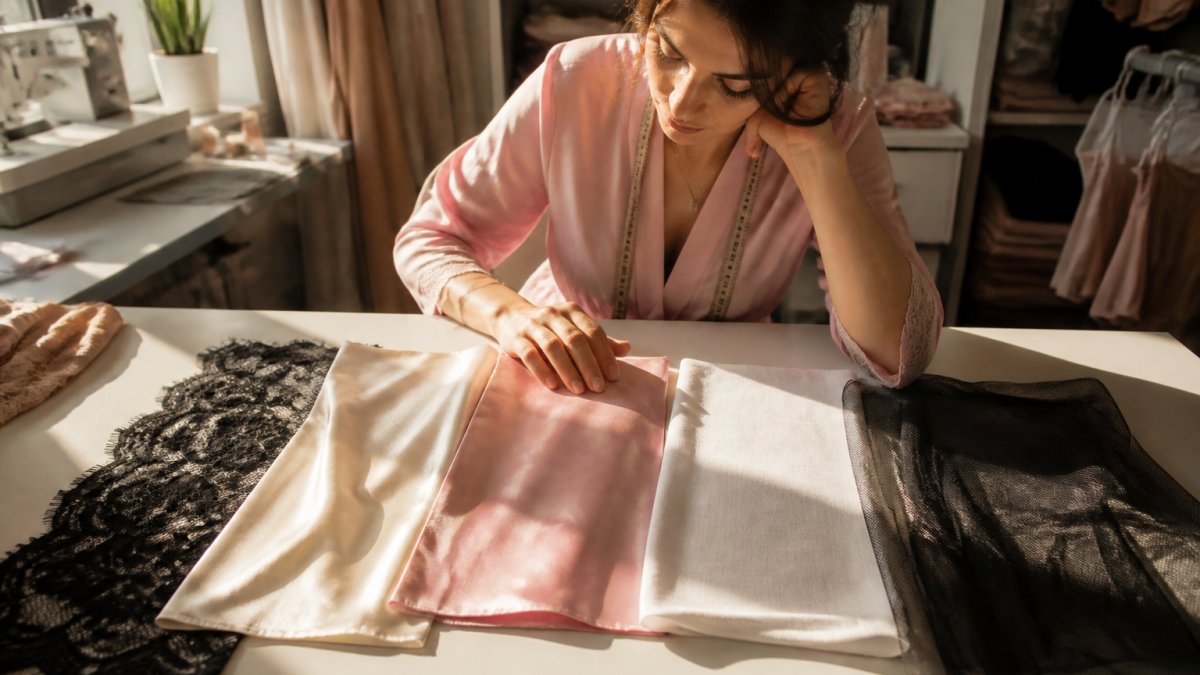
The five fabrics you will see most often are lace, silk, satin, cotton, and mesh. Lace is a patterned openwork fabric, usually knitted from nylon or polyamide with elastane for stretch.
Natural Fibers: Cotton, Silk, and Bamboo
Cotton is the workhorse of everyday underwear fabric. It breathes, handles moisture reasonably well, and rarely irritates skin. Look for combed or long-staple cotton, which resists pilling far better than short-staple alternatives.
Silk remains the benchmark for luxury and skin feel. It is lightweight, drapes beautifully, and regulates temperature in both hot weather and cold. The trade-off is care.
Bamboo, usually processed into bamboo viscose or lyocell, is softer than standard cotton and highly breathable. It is a strong choice for sensitive skin, though it needs gentle handling to hold its shape.
Synthetic Fibers: Nylon, Polyamide, Elastane, and Microfiber
Nylon and polyamide are the same family of synthetic fiber, and they form the backbone of most lingerie. They are strong, lightweight, and hold dye well.
Elastane, also called spandex, supplies stretch and recovery. Even a small percentage transforms a rigid fabric into something that moves with the body. Recovery is the key word: cheap elastane stretches but does not snap back.
Microfiber is a fine-denier synthetic, usually polyester or polyamide, engineered for softness and moisture management. Tricot, a smooth warp-knit often used in bra cups and linings, is another common synthetic construction.
How to Tell If Lingerie Is High Quality: Objective Testing Criteria
High-quality lingerie passes four measurable tests: fiber content, fabric weight, stretch recovery, and construction quality. You can assess most of these in the fitting room or from the product listing.
Start with the label. A quality garment lists exact fiber percentages, not vague terms. Next, feel the fabric weight and drape. Then test stretch: pull the fabric gently and release it. Quality fabric returns to its original shape. Finally, inspect the stitching, seams, and hardware.
| Quality Check | What to Look For | Warning Sign |
|---|---|---|
| Fiber content | Exact percentages listed | "Assorted fibers" or no breakdown |
| Fabric weight | Substantial hand feel | Thin, see-through where it shouldn't be |
| Stretch recovery | Snaps back instantly | Stays stretched, ripples at the edge |
| Construction | Flat seams, secure stitching | Loose threads, puckered seams |
| Hardware | Smooth, coated hooks | Rough edges, flimsy closures |
Stretch, Recovery, and Fabric Weight (GSM and Denier)
GSM (grams per square meter) measures fabric weight. Heavier GSM generally means more durability and opacity, though the right weight depends on the garment.
Denier measures fiber thickness. Lower denier means finer, softer fibers; higher denier means stronger, more opaque fabric. Microfiber typically sits at the low end, while powernet runs heavier.
Stretch and recovery are separate properties. Stretch is how far a fabric extends. Recovery is how completely it returns. A garment with good stretch but poor recovery will bag out at the band and straps within weeks.
Breathability, Moisture Management, and Skin Feel
Breathability determines how much air moves through the fabric, which matters most in hot weather and during daily wear. Moisture management describes how a fabric moves sweat away from skin. Natural fibers like cotton and bamboo breathe well; technical synthetics like microfiber are engineered to wick.
Skin feel is the sum of fiber fineness, surface texture, and finish. Softness alone is not enough. A fabric can feel luxurious in the hand and still irritate after an hour of wear if it traps heat or has rough seaming.
Best Lingerie Fabrics for Sensitive Skin
The best lingerie fabrics for sensitive skin are cotton, bamboo viscose, silk, and fine microfiber, ideally with a cotton gusset and minimal dye.
Cotton tops the list because it is breathable, hypoallergenic for most people, and handles moisture without feeling clammy.
What to avoid: heavily dyed fabrics, stiff lace with scratchy edges, and blends with high polyester content in areas that sit against skin all day.
A cotton gusset is non-negotiable for daily panties. It is the single most important fabric decision for intimate comfort, and quality brands treat it as standard.
Fabric Selection by Garment Component: Bras, Panties, and Bodysuits
Different parts of a garment need different fabrics. This is where most cheap lingerie fails: it uses one fabric throughout instead of matching material to function.
For bras, the cups need shape retention, the band needs firm stretch, and the straps need elasticity without sagging.
For panties, the body fabric can be lace, cotton, or microfiber, but the gusset should be cotton. Waistbands need elastic that lies flat.
For bodysuits and corset styles, high-elastic fabric with tummy control does the structural work, while lace or mesh provides the visual detail.
How to Wash Lace Lingerie by Hand (and Care for Delicate Fabrics)
Learning how to wash lace lingerie by hand is the single most effective way to extend its life. Machine washing, even on delicate cycles, is the leading cause of stretched lace, snagged mesh, and broken underwires.
Here is the process:
- Fill a basin with cool water and a small amount of gentle detergent.
- Submerge the garment and let it soak for 10 to 15 minutes.
- Gently squeeze suds through the fabric. Never rub, wring, or twist.
- Rinse in cool water until no detergent remains.
- Press water out between two towels. Do not wring.
- Lay flat to dry, reshaping cups and bands as they dry.
Skip the dryer entirely. Heat degrades elastane, which is what destroys stretch and recovery over time.
How to Care for Delicate Lingerie Fabrics Long-Term
Long-term care comes down to rotation, storage, and washing frequency. Rotating between several garments spreads wear evenly and gives elastane time to recover between wears.
Wash after two to three wears for bras, sooner in hot weather or after heavy sweating.
textile care guidance from the International Association for Textile Care Labelling outlines the symbols that appear on care labels, which is the fastest way to confirm whether a garment tolerates machine washing at all.
Sustainability, Certifications, and Fiber Traceability
Sustainability in lingerie comes down to three questions: where the fiber came from, how it was processed, and whether the garment will last.
Certifications worth checking include OEKO-TEX Standard 100, which tests for harmful substances in textiles, and GOTS for organic cotton.
Fiber traceability means the brand can name the origin of its materials. This matters most for silk and cotton, where supply chains are long and opaque.
The practical takeaway: favor garments that list certifications, name their fibers precisely, and are built to last.
Conclusion: Building a Lingerie Wardrobe That Lasts
Fabric quality is not mysterious. Fiber content, GSM, denier, stretch recovery, and construction are all checkable, and they predict how a garment will perform long before the first wash. The reader who learns to read a label and test a band will waste far less money than the one who shops on appearance alone.
Lingeriemagic builds its curated selection around exactly this principle: durable designs, a focus on comfort, and an inclusive approach to sizing so every woman can find pieces that fit and last. The Avidlove Christmas Lingerie Set uses ultra-soft elastic lace with adjustable back ties, while the Avidlove Floral Lace Underwire Garter Set pairs 90% polyamide and 10% elastane with a stretchy lace waistband for a snug, comfortable fit.


Get started with Lingeriemagic and build a wardrobe where every piece earns its place.
Frequently Asked Questions
What is the best fabric for comfortable lingerie?
For everyday comfort, cotton and modal blends are excellent choices because they are breathable and soft against the skin. For special occasions, silk and high-quality lace offer a luxurious feel. Look for fabrics with a bit of elastane for stretch and recovery, which helps the garment keep its shape. A cotton gusset is also a practical feature for daily wear. The best fabric ultimately depends on whether you prioritize breathability, stretch, or a delicate look.
How can you tell if lingerie is high quality?
Check the fabric weight and stretch recovery first. High-quality lingerie feels substantial but not heavy, and it snaps back into shape after stretching. Look at the stitching: it should be even and tight, with no loose threads. Lace should have clean edges and a soft feel, not scratchy. Also, check the care label. Fabrics like silk and delicate lace that require hand washing often signal better construction. Finally, a cotton gusset in panties is a sign of thoughtful design.
Is silk or satin better for lingerie?
Silk is a natural fiber, while satin is a weave that can be made from silk, polyester, or nylon. Silk is breathable, temperature-regulating, and naturally hypoallergenic, making it a better choice for sensitive skin. Satin has a glossy finish and a smooth drape, but synthetic satin can trap heat and feel less breathable. If you want luxury and comfort, silk is superior. If you want a similar look at a lower price, a high-quality satin blend can work, but check the fiber content.
What are the most durable fabrics for everyday lingerie?
For daily wear, fabrics with a blend of nylon or polyamide and elastane offer the best durability. They resist stretching out, hold their color well, and withstand frequent washing. Cotton is also durable but may lose shape over time without a small amount of elastane. Microfiber is another strong option because it resists pilling and fading. Avoid 100% silk or delicate lace for everyday rotation unless you are prepared to hand wash them regularly.
Why is lace used in high-quality lingerie?
Lace adds visual texture, elegance, and a romantic feel that smooth fabrics cannot match. In high-quality lingerie, lace is often made from nylon or a cotton blend with a soft hand feel, not the stiff, scratchy lace found in cheaper garments. It is used for cups, trims, and panels because it conforms to the body while allowing some breathability. The best lace has clean, finished edges and enough stretch to move with you without losing its shape.
How do I wash lace lingerie by hand without damaging it?
Fill a basin with cool water and a small amount of gentle detergent. Submerge the lace lingerie and gently squeeze the suds through the fabric for a minute or two. Do not rub, wring, or twist. Rinse with cool water until no soap remains. Lay the garment flat on a clean towel, roll the towel to absorb excess water, then reshape and air dry away from direct sunlight or heat. This method protects the delicate fibers and helps the lace keep its shape.
Which lingerie fabrics are best for sensitive skin?
Natural fibers like cotton, silk, and bamboo are the best choices for sensitive skin because they are breathable, moisture-wicking, and less likely to cause irritation. Look for garments with a cotton gusset and avoid rough lace or synthetic fabrics that trap heat and sweat. If you love lace, choose a soft nylon blend with a smooth finish. Always wash new lingerie before wearing to remove any manufacturing residues. Hypoallergenic fabrics reduce the risk of itching or redness.
How to Check Bra Band Tightness Correctly
Eco-Friendly Alternatives to Traditional Lingerie Soap
Related Posts

Why Silk Lingerie Is Better for Your Skin: A 2026 Guide

How to Find Bra Size Without a Tape Measure

Tips for Buying Lingerie as Gifts: A 2026 Guide

How to Remove Stains from Silk Lingerie Safely

Is Wireless Lingerie Worth It for Everyday Wear?

Sister Sizing Guide for Beginners Explained

Bare Necessities vs Journelle: Which Retailer Fits You
