

How to Wash Lace Lingerie by Hand: A Gentle Guide
Table of Contents
- Step 1: Prep Your Lace Lingerie Before Washing
- Step 2: Choose the Best Detergent for Delicate Lingerie
- Step 3: Wash Lace Lingerie by Hand in Tepid Water
- Step 4: Rinse and Remove Excess Water Safely
- Step 5: How to Dry Lace Bras and Lingerie
- Common Mistakes That Damage Lace Lingerie
- Repairing Snags and Caring for Worn Lace
- Frequently Asked Questions
Last Updated: September 27, 2026
Step 1: Prep Your Lace Lingerie Before Washing
Learning how to wash lace lingerie by hand starts with five minutes of prep, which prevents most damage people blame on washing itself.
Here's your prep checklist:
- Empty every pocket and check for stray pins
- Close all hook and eye closures before washing
- Fasten bra straps to the band with a clip or safety pin
- Sort lights from darks to stop color bleeding
- Check the care label for any special warnings
- Treat fresh stains before they set
Step 2: Choose the Best Detergent for Delicate Lingerie
Look for these features:
- pH-neutral formula that matches the natural balance of delicate fibers
- No enzymes that eat away at protein-based stains and fabric
- No bleach or brighteners that fade color
- No fabric softener that coats fibers and traps residue
Baby shampoo works in a pinch, but a dedicated delicate detergent gives better results.
Step 3: Wash Lace Lingerie by Hand in Tepid Water
Fill a clean basin with tepid water. Add a small amount of gentle detergent and swirl it in.
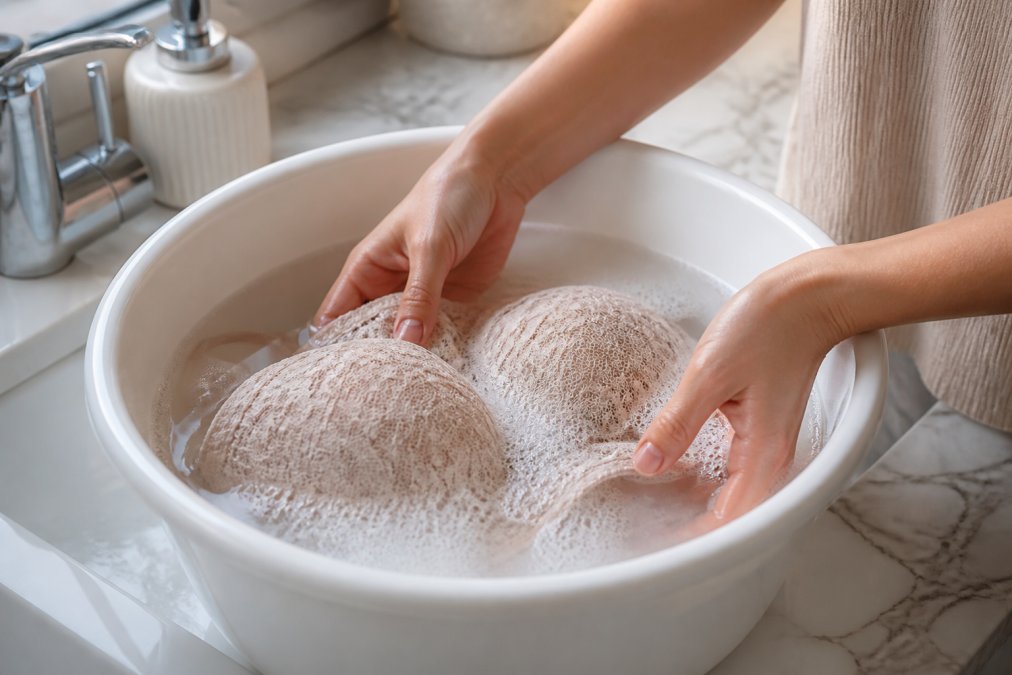
Then use the gentle agitation method:
- Press the garment softly with your palms
- Move it through the water in slow circles
- Never scrub, twist, or wring
- Focus on the band and underarm areas where oils collect
How to Handle Hook and Eye Closures
Wash hook and eye closures while fastened so hooks don't snag other pieces, then check no fibers are caught before rinsing.
How to Remove Stains from Lace
For stains on lace, act fast: blot with a clean cloth, apply a tiny drop of gentle detergent, let it sit 5 minutes, then soak as normal.
Step 4: Rinse and Remove Excess Water Safely
Rinse with cool water until no suds remain. Residue buildup is the top cause of stiff, dull lace.
Here's how to rinse without damage:
- Fill the basin with clean, cool water
- Dip the garment up and down gently
- Repeat until the water runs clear
- Never hold the garment under a running tap
Step 5: How to Dry Lace Bras and Lingerie
The best way to dry lace bras is flat drying on a clean, absorbent towel. Air drying keeps shape and protects elastic, and rushing this step can undo months of careful washing in one afternoon.
Here is the flat-dry method that preserves lace structure:
- Lay a clean, dry bath towel on a flat surface.
- Place the garment flat in its natural shape, cups up.
- Reshape the cups with your hands and smooth any wrinkles or folded edges.
- Roll the towel loosely with the garment inside, pressing gently as you go.
- Unroll and move the piece to a dry towel or mesh drying rack to finish.
Why Flat Drying Works
Lace is a looped or knotted fabric, not a woven one. When wet, the loops relax and lose some memory; flat drying lets them dry in their original shape, while hanging pulls them downward, leaving stretched cups and a sagging band.
Small-Space Drying Hacks for Apartments and Dorms
In a small apartment, dorm, or shared flat, these setups work without a dedicated laundry room:
- Over-the-door folding rack: A collapsible rack that hooks over a door gives you flat-dry space that folds away when not in use. Look for one with a mesh surface so air circulates underneath.
- Mesh drying bag on a shower rod: Clip a mesh laundry bag to your shower curtain rod and lay pieces flat inside. The mesh lets air through and keeps small items from falling.
- Towel on top of a dresser or wardrobe: Lay a clean towel on any flat surface, place the garment on it, and let it dry overnight. This works on top of a dresser, a bookshelf, or even a closed hamper lid.
- Clip hanger for straps only: If you have no flat surface at all, use a clip hanger and attach it to the band or center gore, not the straps. This keeps the cups from stretching.
- Foldable sweater drying rack: A flat mesh rack designed for sweaters works perfectly for bras and can be stored under a bed or behind a door.
How Long Does Lace Take to Dry?
Once dry, store lace lingerie flat or folded in a drawer, not hung, since hanging by the straps can stretch them over time, especially with padding or hardware.
Common Mistakes That Damage Lace Lingerie
Most lace damage comes from a short list of habits. Fix these and your lingerie lasts far longer.
- Wringing or twisting to remove water, which breaks fibers
- Using hot water, which shrinks lace and kills elastic
- Rubbing stains, which pushes dirt deeper and pulls threads
- Regular detergent, which strips and dulls delicate fibers
- Machine washing on any cycle, even delicate
- Tossing in the dryer, the single fastest way to ruin lace
- Hanging by straps, which stretches them beyond repair
Repairing Snags and Caring for Worn Lace
A snag is not the end of a favorite piece. Most snags can be fixed, and knowing how to repair lace can extend a garment's life.
How to Fix a Snag in Lace
A snag is a pulled thread, not a broken one. The goal is to work the loop back to the inside of the fabric without cutting it.
- Do not cut the snag. Cutting creates a loose end that will unravel further.
- Use a fine needle or a snag repair tool. A needle with a small eye or a dedicated snag repair hook works best.
- Work from the inside. Turn the garment inside out and gently pull the snag back through to the wrong side.
- Secure the loop. Once the loop is on the inside, tie it off with a tiny knot or a dot of clear fabric glue. Let it dry flat.
- Smooth the surface. Gently stretch the surrounding lace with your fingers to redistribute the tension.
Preventing Snags Before They Happen
Most snags come from open hooks, rough storage, and washing with hardware. Close every hook and eye before washing, store lace lingerie in a drawer or cloth bag rather than loose in a laundry basket, and tuck the zipper pull inside any mesh laundry bag.
Water Hardness and Lace Care
Hard water is one of the most overlooked threats to delicate fabrics. Its dissolved minerals, mainly calcium and magnesium, leave deposits on fibers that make lace feel stiff, dull the color, and weaken threads. If your tap water leaves white spots on glass or soap scum on tiles, you likely have hard water.
- Add a splash of white vinegar to the rinse water. About one tablespoon per basin is enough. The mild acid helps dissolve mineral residue and leaves lace softer.
- Use a chelating detergent. Some delicate detergents are formulated to bind minerals so they rinse away instead of settling on fabric. Check the label for chelating agents or water-softening ingredients.
- Rinse with filtered or distilled water. If your water is very hard, a final rinse with filtered water removes the minerals that tap water leaves behind.
- Dry with a towel, not air alone. Towel drying removes more mineral-laden water before it can evaporate and leave deposits on the fabric.
When to Retire a Piece
Some damage is not worth repairing. If the elastic has lost its stretch, the lace is torn in multiple places, or the fabric has thinned to transparency, the piece has reached the end of its wearable life, continuing to wash and wear it only sheds fibers and loses more shape.
Frequently Asked Questions
How do you wash lace without damaging it?
Hand washing is the safest method for lace lingerie. Fill a basin with cool or tepid water, add a pH-neutral detergent, and submerge the garment for 10 to 15 minutes. Gently press the suds through the fabric without rubbing or wringing. Rinse with cool water until no residue remains, then press the water out between two towels and lay flat to dry. This approach protects delicate fibers and helps maintain shape retention and elasticity over time.
Can you wash lace in a washing machine?
A washing machine can damage lace through agitation and spin cycles, which cause snagging and fiber damage. If you must use a machine, place the lingerie in a mesh laundry bag, select the delicate cycle with cold water, and skip the spin cycle entirely. Even then, hand washing remains the better option for preserving fabric integrity and extending the life of your lace pieces.
What is the best detergent for hand washing lace?
The best detergent for delicate lingerie is a pH-neutral formula without bleach, enzymes, or harsh chemicals. Look for gentle detergents labeled for delicates or fine fabrics. Standard laundry detergents can leave residue buildup that stiffens lace and dulls its appearance. A small amount is enough; using too much detergent is a common mistake that makes rinsing harder and can irritate sensitive skin.
How often should you wash lace lingerie?
Wash lace lingerie after every two to three wears to prevent oils and perspiration from breaking down delicate fibers. Bras worn against the skin may need washing more frequently in warm weather. Between washes, air the garments in a well-ventilated space to slow bacterial growth. Regular gentle cleaning is a form of preventative maintenance that keeps lace looking fresh and helps it last longer.
Lace lingerie is delicate, but it doesn't have to be fragile. A few gentle habits, from prep to drying, keep every piece feeling new. Lingeriemagic designs durable intimate apparel built to last, with a curated selection of high-quality pieces for every woman. Our inclusive sizing and focus on comfort mean you can find lingerie that fits and lasts. Shop Lingeriemagic to find delicate pieces worth caring for.
High Waisted Bridal Underwear: The 2026 Fit Guide
Luxury Sleepwear for Romantic Occasions: 2026 Guide
Related Posts

Why Silk Lingerie Is Better for Your Skin: A 2026 Guide

How to Find Bra Size Without a Tape Measure

Tips for Buying Lingerie as Gifts: A 2026 Guide

How to Remove Stains from Silk Lingerie Safely

Is Wireless Lingerie Worth It for Everyday Wear?

Sister Sizing Guide for Beginners Explained

Bare Necessities vs Journelle: Which Retailer Fits You
