

How to Remove Stains from Silk Lingerie Safely
Table of Contents
- How to Remove Stains from Silk Lingerie: Quick Action Saves the Garment
- Read the Care Label and Test for Colorfastness Before Any Treatment
- How to Wash Silk Lingerie by Hand Without Setting Stains
- What Detergents Are Safe for Silk (and Which to Avoid)
- How to Remove Oil Stains from Silk Lingerie
- How to Remove Blood Stains from Silk Lingerie
- Treating Sweat, Deodorant, and Makeup Marks on Delicate Silk
- When to Stop and Take Your Silk Lingerie to a Professional Cleaner
- Frequently Asked Questions
Last Updated: October 12, 2026
How to Remove Stains from Silk Lingerie: Quick Action Saves the Garment
Learning how to remove stains from silk lingerie starts with speed: blot within five minutes, never rub, and use cool water, not hot.
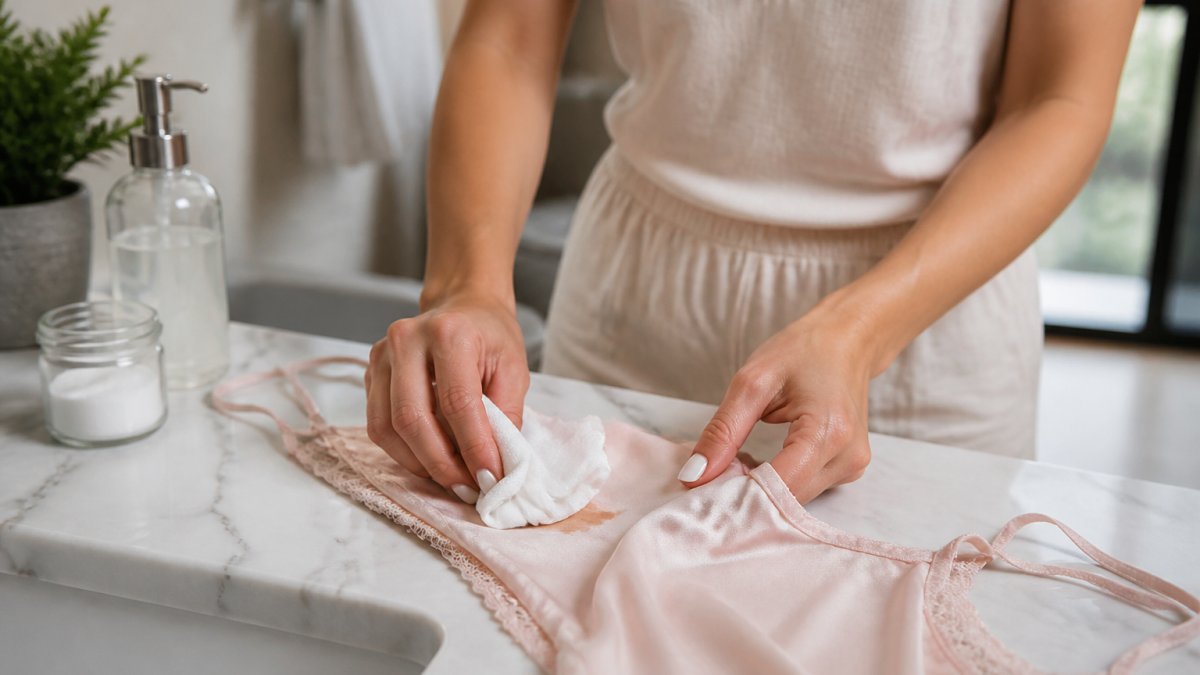
Silk fibers are protein-based, so they react badly to heat, bleach, and rough handling.
Most everyday stains come out at home with the right technique, but the wrong move in the first minute does more damage than the stain.
What to Do in the First Five Minutes
Act fast, but act gently. The first five minutes decide whether the stain lifts or sets.
- Blot, don't rub. Press a clean white cloth or paper towel onto the stain. Rubbing pushes pigment into the silk fibers.
- Work from the outside in. Start at the stain's edge and move toward the center to stop it spreading.
- Skip the water for oil. For grease or oil, sprinkle cornstarch or baby powder on the spot and let it sit 15 minutes to absorb the oil.
- Use cool water only for everything else. Warm or hot water sets protein stains like blood and sweat.
- Never use a hair dryer or iron. Heat locks stains in permanently.
If the care label says "dry clean only," stop and take it to a professional.
Read the Care Label and Test for Colorfastness Before Any Treatment
The care label is the most important guide before any stain treatment: it tells you whether the silk can touch water at all.
Look for three things on the label:
- Dry clean only → do not attempt home treatment
- Hand wash cold → safe to spot clean with cool water
- Do not bleach → this warning appears on almost every silk garment and means exactly that
Before touching the stain, test colorfastness: dab diluted detergent on a hidden area like an inner seam or hem with a white cotton swab.
Wait five minutes. Then blot with a clean white cloth.
If dye transfers, the color is not stable, stop and take the piece to a professional cleaner. If the cloth stays clean, proceed.
How to Wash Silk Lingerie by Hand Without Setting Stains
Hand washing is the safest way to clean silk lingerie, but the order of steps matters.
What you'll need:
- A clean basin or sink
- Cool or lukewarm water
- A pH-neutral or silk-safe detergent
Step 3: Submerge the garment and gently squeeze. Do not wring, twist, or scrub.
Step 4: Rinse in clean cool water. Repeat until no bubbles remain; soap residue attracts dirt and yellows white silk.
Step 6: Air-dry flat, away from sunlight. Direct sun fades dye. A drying rack in a shaded room works well.
What Detergents Are Safe for Silk (and Which to Avoid)
Use a mild, pH-neutral detergent for delicate fabrics; anything labeled "silk-safe" or "delicate wash" is a safe starting point.
| Detergent Type | Safe for Silk? | Why |
|---|---|---|
| pH-neutral silk wash | Yes | Matches silk's natural pH, no dye stripping |
| Baby shampoo (diluted) | Yes, in a pinch | Gentle, low residue |
| Woolite Delicates | Yes | Formulated for protein fibers |
| Standard laundry detergent | No | Enzymes break down silk proteins |
| Bleach or oxygen cleaners | No | Weakens fibers, removes color |
| Fabric softener | No | Leaves residue, damages sheen |
Avoid anything with enzymes, bleach, or "brightening" agents, enzymes break down protein, and silk is protein.
White distilled vinegar works as a final rinse: add one tablespoon to a basin of cool water to remove soap residue and restore shine.
How to Remove Oil Stains from Silk Lingerie
Oil and grease stains need a different approach: water alone won't lift them.
Start with an absorbent powder, cornstarch, baby powder, or baking soda, sprinkled generously over the stain and left at least 15 minutes to pull the oil out.
Brush off the powder gently, then apply diluted silk-safe detergent directly to the stain and let it sit five minutes.
Rinse with cool water. If the stain remains, repeat the powder step before trying detergent again. Never rub oil into the fabric; it spreads.
How to Remove Blood Stains from Silk Lingerie
Blood is a protein stain, and heat sets it, always use cold water, never warm.
Rinse from the back of the fabric with cool running water to push blood out rather than through the silk.
For stubborn marks, apply diluted silk-safe detergent, let it sit 10 minutes, and blot gently with a clean white cloth.
If the blood has been there for days, home treatment may not lift it fully.
Treating Sweat, Deodorant, and Makeup Marks on Delicate Silk
Sweat, deodorant, and makeup are the three most common lingerie soils, and each behaves differently on silk: sweat is acidic and leaves yellow residue and odor, deodorant is a waxy paste that holds odor, and makeup is pigment suspended in oil or silicone. Treating them the same way is why so many marks come back after washing.
Sweat and deodorant buildup
Sweat stains appear as a yellow or gray shadow along the underarm, band, or strap line, oxidized protein and salt, not dirt, so plain water won't lift it.
- Mix one tablespoon of white distilled vinegar with one cup of cool water; the mild acid dissolves mineral and protein residue without attacking the silk.
- Dab onto the mark with a clean white cloth, working from the outside in so you don't create a ring.
- Let it sit no longer than 10 minutes; vinegar left too long on dyed silk can dull the color.
- Rinse by pressing the area against a bowl of cool water, or rinse the whole garment if the mark is large.
- If odor lingers, soak in cool water with a few drops of silk-safe detergent for 15 minutes, then rinse until no bubbles remain.
For a stiff, waxy deodorant patch, don't scrape it. Soak the area in cool water with silk-safe detergent for 15 minutes, then massage the fabric between your fingers under the water; the wax softens and releases.
Makeup: foundation, concealer, lipstick, and mascara
Makeup is the stain most likely to spread if you rush: foundation and concealer are oil-based, lipstick contains wax and dye, and mascara is pigment plus a film-forming polymer.
- Foundation and concealer: Treat as an oil stain first. Sprinkle cornstarch over the mark, wait 15 minutes, brush it off, then apply diluted silk-safe detergent with a cotton swab. Dab, don't rub. Rinse cool.
- Lipstick: Apply clear, fragrance-free dish soap diluted in cool water, let it sit five minutes, then blot. Test on a hidden seam first; dish soap can strip dye from deep colors.
- Mascara: Dampen a cotton swab with cool water and roll it gently across the mark from the outside in. Don't scrub. If dried, place a cool, damp white cloth over the area for two minutes to rehydrate, then blot.
Period stains on silk
Period blood is a protein stain, so the same rules as blood apply: cold water only, no heat, no enzyme detergent. Rinse from the back of the fabric under cool running water as soon as possible; if dried, soak in cool water for 30 minutes first. For set-in stains, diluted silk-safe detergent applied for 10 minutes and blotted gently is the strongest home option.
Water marks and old cleaning rings
Water marks from a previous spot treatment are mineral and detergent residue pushed to the edge of a dried area. Dampen the entire panel evenly with cool water, not just the mark, and air-dry flat, blending the edges removes the ring. Don't rub or use heat to speed drying.
When to Stop and Take Your Silk Lingerie to a Professional Cleaner
The useful question isn't whether to escalate, but when. Home treatment on silk has a narrow safe window, and past a certain point every attempt increases the risk of a permanent ring, color shift, or weakened fiber.
Concrete escalation thresholds
Stop home treatment and hand the piece to a professional cleaner when any of these are true:
- The care label says "dry clean only." Home treatment can void any hope of a clean result and may set the stain permanently.
- The colorfastness test fails. If dye transfers to your white test cloth within five minutes, water-based treatment will strip it unevenly and leave a pale patch no cleaner can restore.
- The stain is more than a few days old, or has oxidized. Blood turned brown, sweat yellowed, or oil darkened has bonded with the fiber; home methods rarely remove these fully, and repeated attempts risk a ring.
Component-specific cautions
Silk lingerie is rarely just silk, and attached components change what's safe:
- Lace: Lace edges fray and distort when rubbed or wrung; even gentle hand-washing can pull the pattern out of shape if the lace isn't supported flat.
- Elastic: Heat and detergent residue degrade spandex and rubber over time, so a piece that survives one wash may lose stretch after several.
- Padding and molded cups: Foam holds water and loses shape when squeezed. Never wring a padded piece; press it flat between towels and dry it shaped.
What to tell the professional cleaner
A cleaner can do more when you arrive with specifics. Tell them:
- What the stain is (blood, oil, makeup, sweat, period) and how long it has been there.
- What you have already tried, including the detergent name and how long it sat.
- Whether the colorfastness test passed or failed.
- Whether the piece has padding, beading, or glued trims.
This lets the cleaner choose a solvent-based treatment that lifts the stain without water, the main advantage professional cleaning has over home methods for silk.
At Lingeriemagic, the focus is on pieces built to last, so care matters as much as the original purchase. A well-made silk garment holds its shape and sheen for years with the right routine; for durable, comfortable silk that stands up to real life, browse the Lingeriemagic collection.
Frequently Asked Questions
Can all stains on silk lingerie be removed at home?
Not all stains come out safely at home. Fresh, water-based marks like sweat or makeup usually lift with cool water and a pH-neutral detergent. Oil and grease stains respond well to absorbent powder followed by gentle washing. Blood needs cold water immediately, never hot. Old, set-in stains, dye transfer, or marks on vintage silk with fragile fibers are best handled by a professional cleaner who can assess the fabric without risking damage.
Can I use vinegar or lemon juice to remove stains from silk lingerie?
White distilled vinegar diluted in cool water can help with deodorant residue and faint water marks on colorfast silk, but always test on a hidden seam first. Lemon juice is riskier: its natural acids can weaken silk fibers and cause fading, especially on darker or dyed garments. If you try vinegar, use a diluted solution, blot rather than rub, and rinse thoroughly so no residue stays in the fabric.
How do I remove oil stains from silk lingerie without ruining the fabric?
Act fast. Lay the garment flat and cover the oil stain with absorbent powder such as cornstarch or talc. Let it sit for 15 to 30 minutes to draw out the oil, then brush it away gently. Apply a small amount of pH-neutral detergent directly to the mark, wait five minutes, and rinse with cool water. Avoid rubbing, which can push oil deeper into the silk fibers and spread the stain.
When should I take stained silk lingerie to a professional cleaner?
Go professional if the stain is old or set in, if the garment has lace, padding, or trims you are unsure about, if the care label says dry clean only, or if a home attempt has already faded or distorted the fabric. Also seek help for ink, dye transfer, or large stains that cover more than a small area. A cleaner can often save a piece that home treatment would ruin.
Silk lingerie rewards patience. The right technique, a mild detergent, and cool water will handle almost any stain that lands on the fabric. When in doubt, stop and let a professional take over. Get started with Lingeriemagic and find silk pieces worth caring for, with a curated selection built for everyday comfort and lasting wear.
Is Wireless Lingerie Worth It for Everyday Wear?
Tips for Buying Lingerie as Gifts: A 2026 Guide
Related Posts

Why Silk Lingerie Is Better for Your Skin: A 2026 Guide

How to Find Bra Size Without a Tape Measure

Tips for Buying Lingerie as Gifts: A 2026 Guide

Is Wireless Lingerie Worth It for Everyday Wear?

Sister Sizing Guide for Beginners Explained

Bare Necessities vs Journelle: Which Retailer Fits You
