

How to Check Bra Band Tightness Correctly
Table of Contents
- Why Checking Bra Band Tightness Correctly Matters
- How Tight Should a Bra Band Be?
- Signs Your Bra Band Is Too Tight
- Signs Your Bra Band Is Too Loose
- Bra Band Riding Up: What It Means and How to Fix It
- How to Check Bra Band Tightness Correctly: A Step-by-Step Fit Check
- How Fit Changes With Movement, Wear, and Bra Style
- Conclusion
- Frequently Asked Questions
Last Updated: October 7, 2026
Why Checking Bra Band Tightness Correctly Matters
Most bra fit advice focuses on the cups. That is a mistake.
This guide from Lingeriemagic breaks down how to check bra band tightness correctly.
A loose band lets the cups drift, which causes gaping, digging straps, and a back that rides up.
Below, we'll show you exactly how to test band tightness, spot the warning signs, and fix problems without automatically sizing up.
How Tight Should a Bra Band Be?
A bra band should sit snug and level, firm enough that it stays in place when you move, but loose enough to slide two fingers underneath. If the band leaves deep marks or you can pull it more than 5 cm away from your back, the fit is off.
The right tension comes down to feel, not just numbers. A well-fitted band anchors the bra so the cups and straps can do their jobs.
The Two-Finger Test and the Snug Fit Standard
The two-finger test is the fastest way to judge band tension. Slide two fingers flat under the band at your side, near the underbust.
If your fingers glide in with no resistance, the band is too loose. If you can barely wedge one finger under, it is too tight.
Do this test on the loosest hook, not the tightest. New bras stretch over time, so you want room to tighten later.
Testing the Band Without the Cups
Here is what most guides miss: test the band independently of the cups.
Fasten the bra backward, with the cups hanging down your back. This removes the cups from the equation, so you feel only the band's grip on your ribcage.
Walk around for a minute. Does the band stay put? Does it dig in?
If the band passes this test but the bra still feels wrong, the problem is the cups, not the band.
Signs Your Bra Band Is Too Tight
A band that is too tight announces itself. Watch for these signs:
- Red, deep marks that last more than an hour after you take the bra off
- Trouble taking a full, deep breath
- A band that digs into your ribs or underbust
If you notice any of these, the band is squeezing too hard. A snug fit should feel secure, never painful.
Signs Your Bra Band Is Too Loose
A loose band is sneakier, because it often feels fine when you first put the bra on. The real test comes when you move. Look for:
- The band rides up your back during the day
- Straps slip off your shoulders
- The center of the bra pulls away from your chest
A loose band cannot support the cups. It also puts extra strain on the straps, which leads to shoulder pain over time.
Bra Band Riding Up: What It Means and How to Fix It
A band that rides up almost always means the band is too big, not the cups. When the band is loose, the weight of the cups pulls the back upward. The fix is a smaller band size, not a larger one.
Why a Band Rides Up (And Why Sizing Up Won't Fix It)
Many people size up when a bra feels uncomfortable, thinking a bigger band will help. This backfires. A larger band rides up even more, because there is less tension to hold it in place.
The real fix is usually a smaller band with a larger cup. This keeps the band anchored while giving your bust the room it needs. It sounds counterintuitive, but it works.
How to Check Bra Band Tightness Correctly: A Step-by-Step Fit Check
This fit check takes about a minute. Do it in front of a mirror, wearing a fitted top or nothing over the bra. The goal is not just to see if the band feels okay, but to measure its tension in a repeatable way.
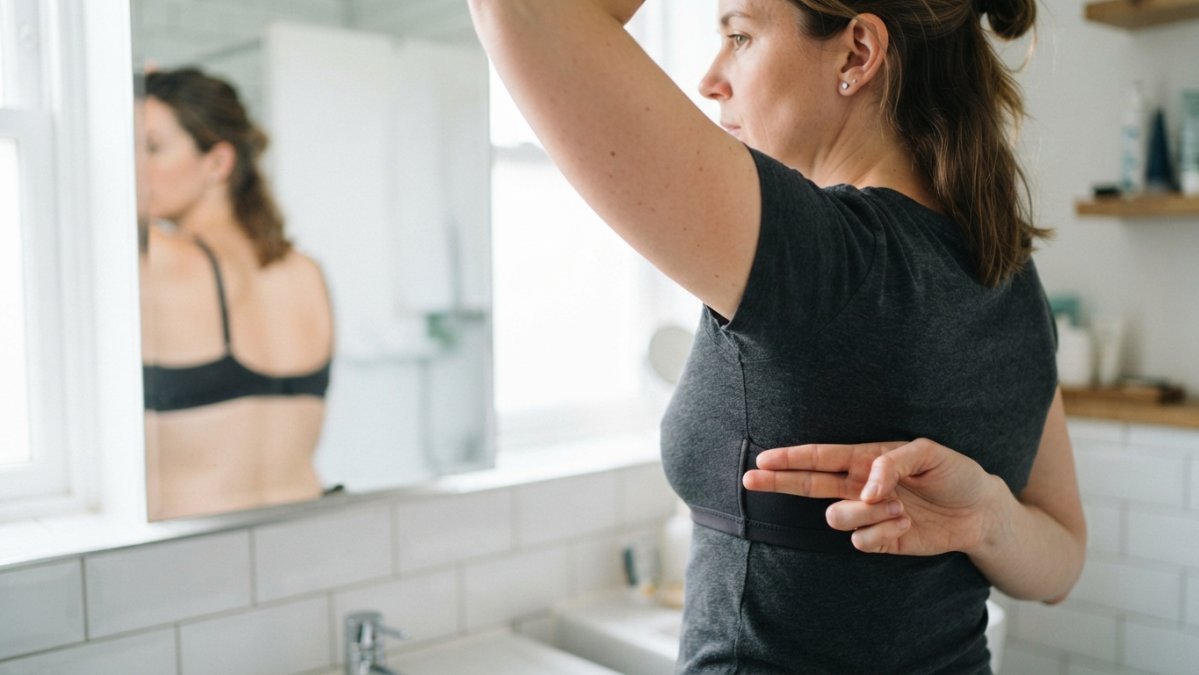
- Fasten the bra on the loosest hook. This is your starting point. New bras stretch, so you need room to tighten later.
- Check the back position. The band should sit level, parallel to the floor. If it rides up, the band is too big.
- Run the finger test with precision. Slide two fingers flat under the band at your side, near the underbust. You want to feel slight resistance, the band should press back against your fingers but not pinch. If your fingers glide in with no resistance, the band is too loose. If you can barely wedge one finger under, it is too tight. Do this on the loosest hook, not the tightest.
- Test the band independently of the cups. Fasten the bra backward, with the cups hanging down your back. This removes the cups from the equation, so you feel only the band's grip on your ribcage. Walk around for a minute. Does the band stay put? Does it dig in? This isolated test tells you whether the band size is right, separate from any cup issues. If the band passes this test but the bra still feels wrong, the problem is the cups, not the band.
- Move your arms. Reach overhead, twist, and bend forward. The band should stay level and not shift. If it rides up or gaps, the band is too loose.
- Check the mirror. Look for digging, pinching, or a band that has crept upward. Red marks that fade within an hour are normal; deep marks are not.
- Try the next hook. If the loosest hook feels too tight, the band size is too small. If the tightest hook feels loose, the band is too big.
How to Distinguish Secure Tension from Painful Tightness
Secure tension means the band stays in place when you move, but you can still take a full, deep breath without restriction. Painful tightness means you feel pressure on your ribs, you unconsciously tug at the band, or you notice numbness or tingling in your shoulders or arms. If any of these occur, the band is too tight. A snug fit should never hurt.
Testing the Band Independently of the Cups
This is the step most guides skip. By fastening the bra backward, you isolate the band's fit from the cups. If the band feels comfortable and stays put in this position, but the bra feels wrong when worn normally, the issue is likely cup size or shape. If the band still digs or rides up when worn backward, the band size itself is the problem.
How Fit Changes With Movement, Wear, and Bra Style
A bra that fits at 8 a.m. may not fit at 4 p.m. Elastic relaxes with body heat and movement, so the band loosens through the day. This is normal. That is why the loosest hook matters, it gives you three settings to work with as the band stretches.
How Movement Affects Band Tension
Band tension changes depending on what you're doing. When you sit, the band may feel tighter because your ribcage compresses slightly. When you reach overhead, a loose band will ride up. When you breathe deeply, a too-tight band will restrict your ribcage expansion. To check fit across movement:
- Sit down and slouch slightly. Does the band dig in more? If so, it may be too tight for seated wear.
- Reach both arms overhead. Does the band stay level? If it rides up, it's too loose.
- Take three deep breaths. Can you inhale fully without the band cutting into your ribs? If not, it's too tight.
How Wear and Time Affect the Band
Over weeks and months, elastic loses its snap. A band that felt snug when new may feel loose after 20 wears. This is why you should always start on the loosest hook, as the band stretches, you can move to the middle and then the tightest hook. If you're already on the tightest hook and the band still feels loose, it's time to replace the bra or size down in the band.
How Bra Style and Materials Change the Feel
Not all bands are created equal. The fabric, construction, and style all affect how tight the band feels:
- Lace and mesh bands have more give than smooth microfiber. A lace band may feel softer and stretch more, so you might need a slightly firmer fit.
- Wide, structured bands (common in sports bras or longline bras) distribute pressure over a larger area, so they can feel tighter without digging.
- Thin, elastic bands (common in bralettes) have less support and may feel looser even when correctly sized.
Troubleshooting Tightness Without Automatically Sizing Up
If the band feels too tight, don't immediately go up a band size. First, check the cups. A too-small cup can make the band feel tight because your bust pushes the cups away, pulling the band. Try a larger cup size with the same band. If that doesn't help, consider a band extender, it adds an inch or two without changing the band size.
Safety and Comfort Boundaries
A correctly fitting band should never cause pain. Warning signs that the band is too tight include: deep red marks that last more than an hour, trouble taking a full breath, numbness or tingling in your arms or shoulders, and a constant urge to tug the band down. If you notice any of these, adjust the band or try a different size.
Conclusion
Band fit is the foundation of every comfortable bra. Get the band right, and the cups, straps, and underwire all fall into place.
Lingeriemagic carries a curated range of bras and lingerie sets with adjustable straps, hook-and-eye closures, and inclusive sizing, so you can find a band that fits your shape and stays comfortable all day.
Continue shopping at Lingeriemagic and find the fit that feels like it was made for you.
Frequently Asked Questions
How many fingers should fit under a bra band?
Two fingers should slide flat under the band at the side of your ribcage without forcing. That is the standard snug fit: firm enough to stay in place, loose enough that you can slip fingers underneath without pinching. If you cannot fit one finger, the band is too tight. If your whole hand slides under easily, it is too loose and will not support you.
Should a new bra fit on the tightest or loosest hook?
Start on the loosest hook setting. Elastic relaxes with wear, so you move to tighter hooks over time as the band stretches. A new bra fastened on the tightest hook has nowhere to go once it loosens, and it usually means the band size is too large. If the loosest hook already feels too loose, size down in the band.
Can a tight bra band cause discomfort or other issues?
Yes. A band that digs in, pinches, or leaves red marks that last after you remove the bra is too tight. Signs your bra band is too tight include ribcage pressure, restricted breathing, and underwire digging into breast tissue. Before sizing up in the band, try a band extender or a larger cup, since cup overflow can push the band outward and make it feel tighter than it is.
How should a bra band sit on your back?
The band should sit parallel to the floor all the way around, level with the front. If the back rides up toward your shoulder blades, that is a classic sign of a band that is too loose or stretched out. A band riding up shifts support onto the straps, which causes shoulder digging and cup gaping. Tighten the hook setting or size down in the band.
Victoria Secret Alternatives for Quality: 2026 Guide
High Quality Lingerie Fabric Guide: What to Look For
Related Posts

Why Silk Lingerie Is Better for Your Skin: A 2026 Guide

How to Find Bra Size Without a Tape Measure

Tips for Buying Lingerie as Gifts: A 2026 Guide

How to Remove Stains from Silk Lingerie Safely

Is Wireless Lingerie Worth It for Everyday Wear?

Sister Sizing Guide for Beginners Explained

Bare Necessities vs Journelle: Which Retailer Fits You
