

Inclusive Sizing Lingerie Brand Guide: 2026 Fit Tips
Table of Contents
- What Size-Inclusive Lingerie Actually Means
- Why Size Range Claims Need a Closer Look
- How to Measure Bra Size at Home: A Step-by-Step Fit Guide
- Best Plus Size Lingerie Brands and What Sets Them Apart
- Inclusive Lingerie Shopping Tips: What to Check Before You Buy
- Support and Comfort: Underwire vs. Wireless for Full-Bust and Full-Figure Fits
- Finding Your Silhouette: Fit Guidance for Different Body Shapes
- Beyond the Basics: Adaptive, Sustainable, and Sensory-Friendly Options
- Conclusion
- Frequently Asked Questions
Last Updated: October 2, 2026
What Size-Inclusive Lingerie Actually Means
Inclusive sizing lingerie is intimate apparel designed, graded, and stocked across a genuinely wide band and cup range, so full-bust, full-figure, and plus-size shoppers find their size in the same collection as everyone else. This inclusive sizing lingerie brand guide from Lingeriemagic exists because the label on the box rarely matches the reality on the shelf.
Why Size Range Claims Need a Closer Look
A brand can stock a wide size range and still fail you, because range is only half the story. The other half is grading: how a pattern scales from a 32B to a 42H without distorting cup depth, wire width, or band tension.
Most disappointing purchases trace back to three things:
- Grading shortcuts. A brand extends its size chart without redrafting the pattern, so larger cups sit shallow and wires dig into the ribcage.
- Inconsistent retail standards. Two labels can both print "XL" and mean two different bodies.
- Vanity sizing. Numbers get smaller to flatter shoppers, which makes measurement accuracy nearly impossible to trust.
How to Measure Bra Size at Home: A Step-by-Step Fit Guide
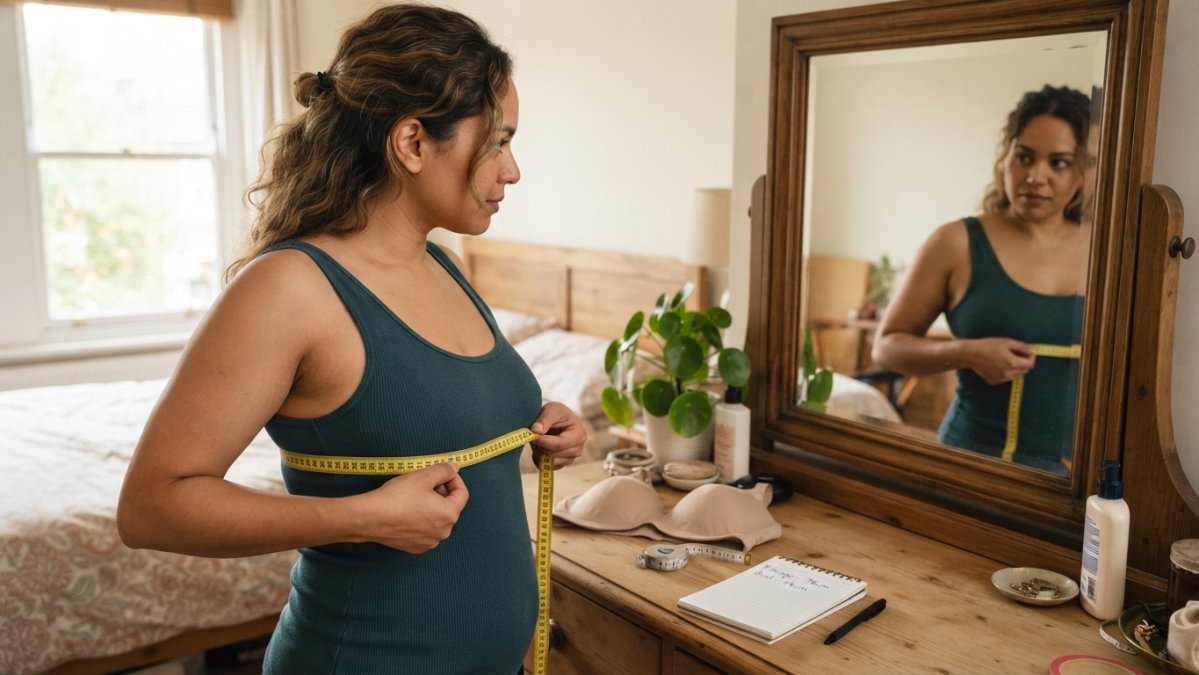
Measuring bra size at home takes about five minutes with a soft tape and a mirror. Wear an unpadded bra, stand relaxed, and keep the tape level. You need two numbers, band and cup, but the real skill is interpreting them for your body.
Band Size and Cup Size: Getting Both Right
- Measure your band. Wrap the tape snugly around your ribcage, directly under your bust. Round to the nearest whole number. If you get an odd number, round down to the nearest even number (e.g., 33 inches → 32 band).
- Measure your bust. Run the tape around the fullest part of your chest, keeping it level and not compressing the tissue. Stand straight and breathe normally.
- Find the difference. Subtract your band measurement from your bust measurement. Each inch of difference generally equals one cup letter: 1 inch = A, 2 inches = B, 3 inches = C, 4 inches = D, 5 inches = DD/E, 6 inches = DDD/F, and so on.
- Check the band first. The band carries most of the support. If it rides up your back, size down. If it digs in and leaves red marks, size up.
- Re-measure every six months. Body changes, weight shifts, and hormonal cycles all move your numbers.
Measurement accuracy matters more than any single number; a slipped tape or loose band throws off the whole calculation.
Sister Sizing: Your Secret Weapon for a Perfect Fit
Sister sizing means cup volume stays the same when you go up a band size and down a cup size (or vice versa). A 34C has the same cup volume as a 36B and a 32D, so if a 34C feels tight in the band but the cups fit, try a 36B.
Troubleshooting Common Fit Issues
Even with accurate measurements, fit problems happen. How to diagnose them:
- Band rides up in the back: The band is too loose. Size down in the band (e.g., 36 to 34) and go up a cup size to maintain volume.
- Cups gaping at the top: The cup is too large or the style doesn't match your breast shape. Try a smaller cup or a different style (e.g., balconette for full-on-bottom shapes).
- Cups cutting into breast tissue: The cup is too small or too shallow. Go up a cup size or look for styles with deeper cups.
- Underwire digging into ribs: The band is too loose, causing the wires to take the weight. Tighten the band or size down.
- Straps falling off shoulders: The band is too loose or the straps need adjusting. Tighten the band first; if that doesn't work, look for styles with closer-set straps.
- Center gore not lying flat: The cup is too small or the band is too large. Try a larger cup or smaller band.
Measuring for Different Breast Shapes
Your bra size is a starting point, but breast shape, projection, fullness, root width, symmetry, determines which styles actually fit. How to shop for your shape:
- Shallow vs. projected: If your breast tissue spreads across a wider area with less forward projection, you have shallow breasts. Look for bras with wider wires and shallower cups. If your breasts project forward significantly, you need deeper cups with more projection.
- Full on top vs. full on bottom: Determine where your breast tissue is fullest. If you have more tissue above the nipple, you're full on top, try balconette or plunge styles. If you have more below, you're full on bottom, try full-coverage or seamed cups.
- Wide vs. narrow roots: Your root is where your breast attaches to your chest. If your breast tissue extends under your arms, you have wide roots, look for bras with wider underwires. If your breasts are concentrated on the front of your chest, you have narrow roots, look for narrower wires.
- Asymmetry: It's common for one breast to be larger than the other. Always fit to the larger breast and use a bra insert or adjustable strap on the smaller side for balance.
Best Plus Size Lingerie Brands and What Sets Them Apart
The best plus-size lingerie brands share three traits: a real size chart with band and cup ranges, patterns graded separately for larger sizes, and fit guidance rather than just pretty photos. Price alone tells you very little.
| What to Check | Weak Signal | Strong Signal |
|---|---|---|
| Size range | "One size fits most" | Full band and cup range listed |
| Fit guidance | Generic sizing chart | Per-style fit notes and model measurements |
| Construction | Thin, single-layer cups | Supportive seams, adjustable straps |
| Returns | Restrictive policy | Clear, straightforward process |
The Unique Angle: Fabric Technology and Sensory Comfort
Most guides focus on size ranges, but fabric feel matters just as much, especially for sensitive skin or sensory processing needs. What to look for:
- Moisture-wicking fabrics: Breathable microfiber blends that pull sweat away from the skin, reducing irritation during long wear.
- Tagless construction: Eliminating the scratchy labels that bother sensitive skin.
- Seam-free cups: For those who find seams irritating, seamless molded cups provide a smooth feel, though they may offer less shape than seamed styles.
- Soft-touch elastics: Plush-backed elastic, which reduces digging and chafing.
Sustainability and Ethical Manufacturing
A growing number of inclusive brands prioritize eco-friendly production, using recycled nylon in stretch fabrics or organic cotton in panties. Look for brands that publish factory lists or hold certifications like OEKO-TEX Standard 100.
Inclusive Lingerie Shopping Tips: What to Check Before You Buy
Inclusive lingerie shopping tips come down to reading the details most shoppers skip. Check the size chart against your own measurements, not the size you wear elsewhere, and look for adjustable straps and a multi-setting hook-and-eye closure to fine-tune fit as fabric relaxes.
Fabric, Construction, and the Details That Signal Quality
Stretch fabric quality decides how a piece feels after ten washes. Look for:
- Supportive seams rather than glued edges that lift over time
- Wire channels that stay flat against the body
- Breathable linings for all-day comfort
- Reinforced straps that hold tension without digging
Support and Comfort: Underwire vs. Wireless for Full-Bust and Full-Figure Fits
Underwire gives more structured support and shape for full-bust and full-figure fits; wireless styles prioritize comfort for lighter support needs, lounging, or post-surgical recovery. Neither is universally better, the right choice depends on your support needs and how you'll wear it.
Finding Your Silhouette: Fit Guidance for Different Body Shapes
Your silhouette depends on matching cup depth, band tension, and coverage to your actual shape, not just your size, two women in the same size can need completely different styles because breast shape, root width, and torso length vary.
- Shallow and wide-set: look for cups with wider wires and less projection
- Full on top: choose styles with stretch lace along the upper cup
- Full on bottom: prioritize a firm band and seamed lower cups
- Asymmetrical: adjustable straps and stretch cups even out the difference
Beyond the Basics: Adaptive, Sustainable, and Sensory-Friendly Options
Adaptive lingerie and sensory-friendly design are areas to consider. Adaptive pieces use front-closure hooks, magnetic fastenings, or soft seams for limited mobility or post-surgical needs; sensory-friendly options remove tags, harsh lace, and rigid wiring.
Conclusion
Finding lingerie that fits, lasts, and feels made for your body shouldn't require a research project. But most brands treat extended sizing as a marketing line rather than a manufacturing standard, and shoppers pay for it in returns and disappointment.
Frequently Asked Questions
What does size-inclusive mean in the lingerie industry?
Size-inclusive lingerie means a brand offers a genuinely broad range of band and cup sizes, typically extending from small bands with large cups to larger bands with smaller cups, rather than stopping at a narrow mid-range. It also covers how the garments are designed: adjustable straps, multiple hook-and-eye closures, and stretch fabrics that accommodate body diversity. A brand is only truly inclusive if its size chart reflects real bodies and its fit consistency holds across the full range, not just the core sizes.
How can I find lingerie brands that offer a wide range of sizes?
Start by checking the brand's published size chart before browsing styles. Look for cup size ranges that go beyond a D or DD and band sizes that extend below 32 and above 40. Read the fit guide for measurement instructions and check whether the brand uses consistent sizing across its collections. Reviews that mention full-bust or full-figure fits are a useful signal. If a brand lists extended sizing but only in one or two styles, that is a limited range, not true inclusive sizing.
What should I look for when shopping for inclusive lingerie?
Check four things: the size range (does it cover your band and cup?), the fit guide (does it explain how to measure at home?), the construction (adjustable straps, hook-and-eye closure with multiple settings, and stretch fabric in the band), and the return policy. Fabric matters too. Soft, breathable materials with a bit of stretch handle body shape variation better than rigid fabrics. If a brand publishes measurement accuracy tips alongside its size chart, that is a good sign its sizing is reliable.
Are there luxury lingerie brands that prioritize inclusive sizing?
Yes. A growing number of luxury and indie labels now offer extended sizing as a core part of their range rather than a token addition. Look for brands that treat inclusive sizing as a design standard, meaning the same construction quality, fabric selection, and support level applies across every size. Lingeriemagic, for example, builds its curated selection around an inclusive approach, offering everyday luxury and comfort across a diverse range of sizes and styles. Check each brand's size chart to confirm the range covers your measurements.
How do I know if a lingerie brand's sizing is accurate before ordering?
Measure yourself at home using a soft tape: band size is your underbust measurement rounded to the nearest even number, and cup size comes from the difference between your bust and band measurements. Compare your numbers to the brand's specific size chart, not a generic one, because fit consistency varies between labels. Look for brands that publish detailed measurement guidance and offer easy returns. If a brand's chart includes notes on stretch fabric and adjustable straps, that suggests it has accounted for real-world fit variation.
What is the difference between underwire and wireless lingerie for larger cup sizes?
Underwire provides structured lift and separation, which many full-bust and full-figure wearers prefer for support during longer wear. Wireless styles rely on wider bands, molded cups, and stretch fabric to distribute weight, and they can be more comfortable for everyday wear or for anyone who finds underwire pressure uncomfortable. The right choice depends on your support level needs and how long you plan to wear the piece. Some brands offer both options across their extended size range so you are not forced to compromise.
Why Does My Lingerie Fall Apart? 2026 Care Guide
Bra Fitting Services vs Home Measurement: Which Wins?
Related Posts

Why Silk Lingerie Is Better for Your Skin: A 2026 Guide

How to Find Bra Size Without a Tape Measure

Tips for Buying Lingerie as Gifts: A 2026 Guide

How to Remove Stains from Silk Lingerie Safely

Is Wireless Lingerie Worth It for Everyday Wear?

Sister Sizing Guide for Beginners Explained

Bare Necessities vs Journelle: Which Retailer Fits You
