

Bra Fitting Services vs Home Measurement: Which Wins?
Table of Contents
- Bra Fitting Services vs Home Measurement: Which Method Actually Works?
- Signs Your Bra Does Not Fit Properly
- How to Measure Bra Size at Home
- Bra Fitting Services: What Happens in a Professional Session
- Accuracy, Cost, and Convenience: Home Measurement vs Professional Fitting
- The Sister Size Solution and Why Your Size Changes
- Accessibility, Hormones, and Bra Longevity: What Most Guides Miss
- Conclusion: Choosing the Right Fitting Method for You
- Frequently Asked Questions
Last Updated: October 3, 2026
Bra Fitting Services vs Home Measurement: Which Method Actually Works?
Most women wear the wrong bra size, and the gap between a home tape measure and a trained eye is bigger than the lingerie industry admits. Bra fitting means determining band and cup size from the underbust and bust, then checking how a bra actually sits. This guide from Lingeriemagic compares bra fitting services vs home measurement so you can pick the route that stays comfortable past lunchtime.
The short version: home measurement gets you close, but a professional fitting gets you right, because fit is about shape, wire placement, and band tension, not just two numbers.
Signs Your Bra Does Not Fit Properly
A bra that does not fit properly announces itself long before it becomes painful: the band rides up, wires dig into breast tissue, straps slide off. None of that means your body is the problem.
Common signs your bra does not fit properly include:
- The band climbs up your back when you raise your arms
- The center gore floats away from your sternum
- Wires poke or sit on top of breast tissue instead of around it
- Straps leave deep grooves or slide off constantly
- Cups gap at the top or spill over at the sides
If two or more sound familiar, your current size is a starting point, not a verdict.
The Band Test: If It Rides Up, It Is Too Loose
The band carries most of a bra's support, not the straps. Fasten on the loosest hook and pull the band more than a couple of centimetres from your ribcage. If it lifts easily, the band is too loose.
Cup and Wire Red Flags You Should Never Ignore
Wire placement tells you more about cup size than any measurement. The wire should sit flat against your ribcage and encircle all breast tissue, with the gore resting against your chest. A floating gore usually means the cup is too small.
How to Measure Bra Size at Home
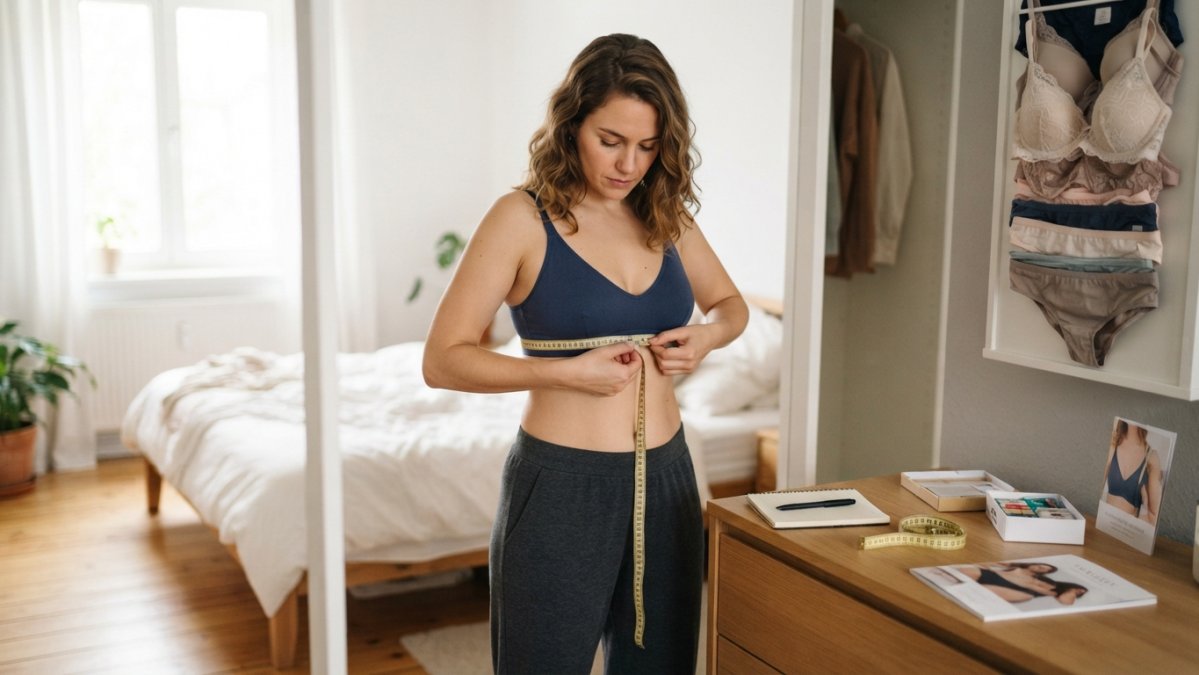
Measuring bra size at home is straightforward if you accept one limitation: a tape measure gives a starting size, not a guaranteed fit. It measures volume and circumference, while a bra must also match your shape, tissue density, and posture.
What You Need Before You Start
Gather a soft tape measure, a mirror, and an unpadded bra, wire-free or lightly lined gives a truer bust measurement. Keep the tape level, and measure over bare skin or a thin bra, never over clothing.
Step-by-Step: Underbust and Bust Measurements
- Wrap the tape snugly around your ribcage, directly under the bust, and note the underbust measurement in centimetres.
- Add roughly 10 cm to estimate your band size, then round to the nearest even number.
- Measure around the fullest part of your bust, keeping the tape level and not compressing breast tissue.
- Subtract the underbust figure from the bust figure. Each 2.5 cm of difference typically equals one cup size.
- Treat both numbers as a starting point for trying bras on.
Bra Fitting Services: What Happens in a Professional Session
A professional fitting replaces guesswork with observation. A trained fitter checks how your current bra sits, band tension, and wire placement, then adjusts size and style until the bra supports without pressure. Sessions run 20 to 30 minutes and are usually free.
What Actually Happens, Step by Step
A good fitting follows a predictable sequence, which removes most of the awkwardness first-timers feel.
- The intake conversation. The fitter asks what you wear now, what bothers you (straps slipping, wires digging, cups gaping), and what the bra is for, everyday wear, a specific dress, post-surgical recovery, or nursing.
- The over-clothes assessment. Before you change, many fitters assess how your current bra sits through your shirt. Band position, strap tension, and cup placement tell them where to start.
- The starting size. The fitter measures you or brings a few sizes based on visual assessment. Expect to start one or two sizes away from what you walked in wearing.
- The fit check on the loosest hook. A new bra should fasten on the loosest hook so you can tighten it as the band relaxes. If it only fits on the tightest hook in the store, it will be too loose within weeks.
- Scoop and swoop. The fitter pulls breast tissue forward and up in each cup, then checks whether the wire still sits flat against the ribcage. This catches more fit problems than any measurement.
- Movement testing. You will raise your arms, bend forward, and sit down. A band that rides up when you reach overhead is too loose, no matter how it looked standing still.
- Style triage. Once the size is right, the fitter adjusts the style, balconette versus full cup, plunge versus minimiser, because two bras in the same size can fit completely differently depending on cup construction and wire shape.
What to Bring and Wear
Wear or bring the bra that bothers you most, fitters learn more from a problem bra than a perfect one. A thin, unpadded bra is easier to fit over than a molded or push-up style, and a fitted t-shirt shows how the bra reads under clothing. Shopping for a specific outfit? Bring it or a photo.
In-Store Fittings: Department Stores and Independent Boutiques
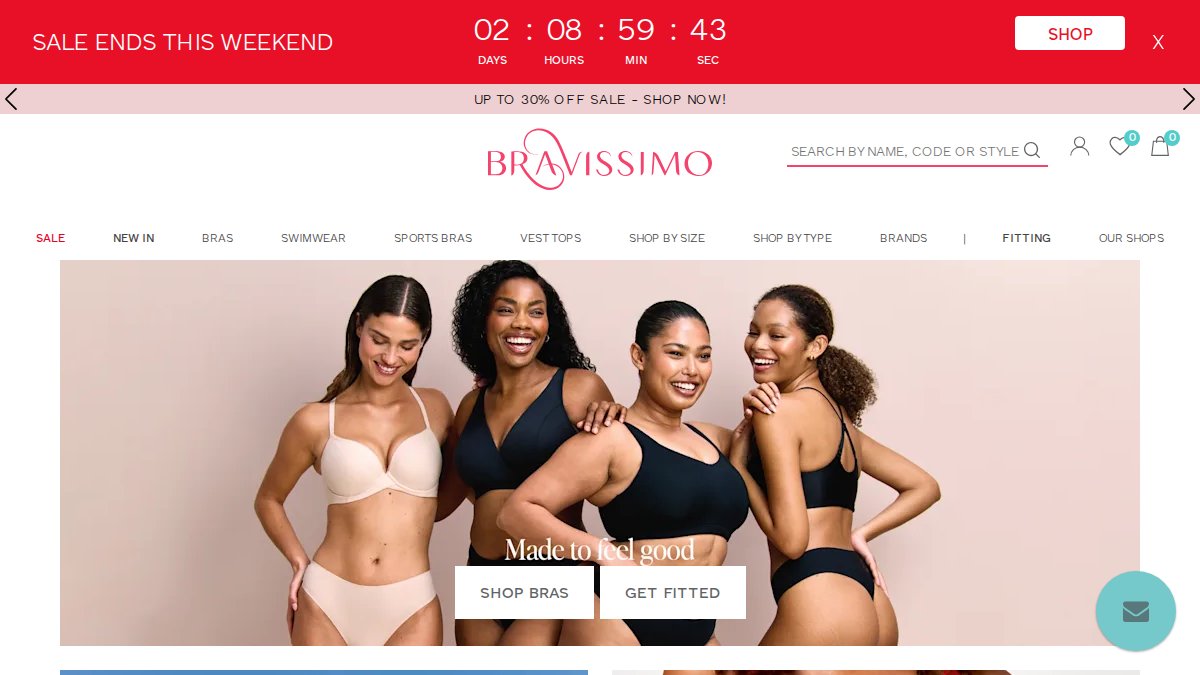
Department store fitting services are convenient and widely available, with trained staff and multiple styles to try on the spot. Independent boutiques go further: staff often fit all day, and stock skews toward niche brands and extended cup sizes. The trade-off is geography, boutiques cluster in larger cities, and the best book out days in advance.
Virtual Fittings: How Remote Sessions Work
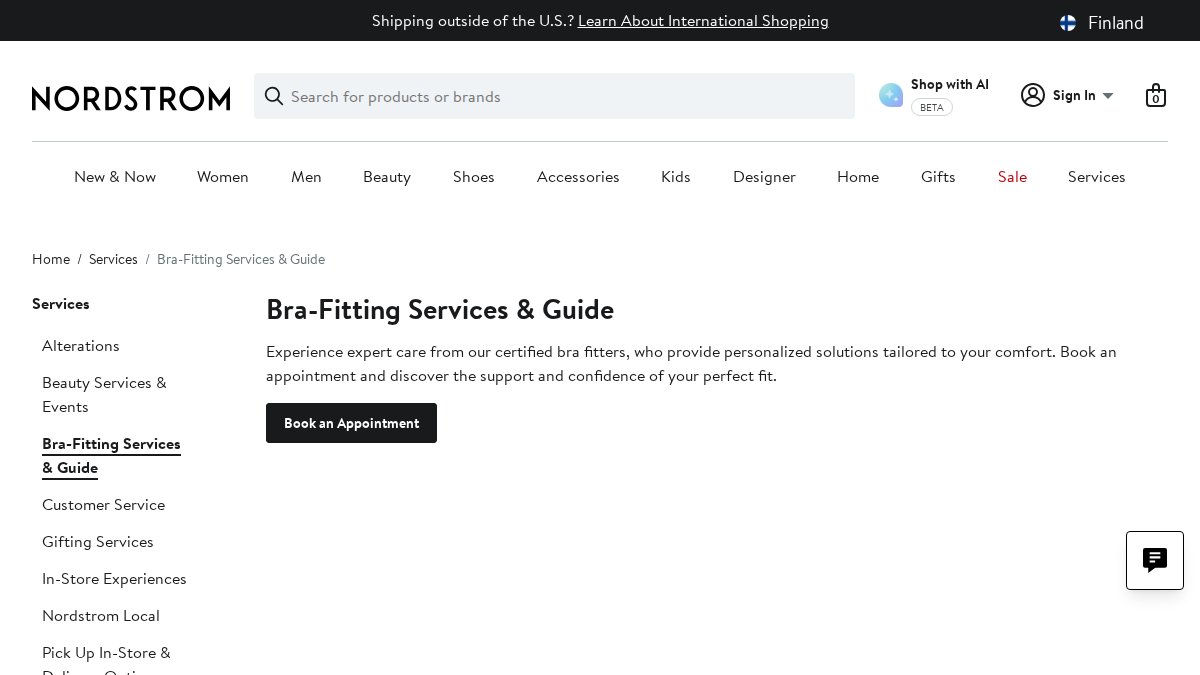
Virtual fittings run over live video, usually free, and you do not always need a tape measure. The fitter watches how your current bras sit, asks you to adjust straps and band, and reads fit from posture and movement on camera. It suits anyone who cannot easily reach a store, though a stable connection, good lighting, and privacy matter.
When a Fitting Is Worth It Over Measuring at Home
A fitting is worth it if your size changed in the last year, you have never found a bra that stays comfortable past lunchtime, you are between cup sizes, you have asymmetric breasts (very common, and almost impossible to solve with a tape measure alone), or you need an exact fit for a special occasion.
Accuracy, Cost, and Convenience: Home Measurement vs Professional Fitting
Professional fitting wins on accuracy; home measurement wins on convenience and cost. Both are usually free, but they trade off differently depending on your body, schedule, and how much a wrong size costs you.
| Factor | Home Measurement | Professional Fitting |
|---|---|---|
| Accuracy | Good starting size | Highest, checks shape and wire placement |
| Cost | Free | Usually free with purchase |
| Time | 10-15 minutes | 20-30 minutes |
| Convenience | Do it any time | Requires travel or a video call |
| Best for | Stable size, simple styles | Body changes, extended sizes |
The Sister Size Solution and Why Your Size Changes
Sister sizes are the fastest fix when a bra fits in the cup but not the band. If a 34C feels tight in the band but right in the cup, try a 36B: one band size up, one cup size down.
Your size also drifts. Weight fluctuation, hormonal changes across the cycle, pregnancy, and menopause all shift breast tissue and ribcage measurements.
Accessibility, Hormones, and Bra Longevity: What Most Guides Miss
Three things get left out of nearly every fitting guide: mobility, hormones, and how long a bra should last. Each changes how you approach fitting, and none are solved by a tape measure alone.
Fitting When Reaching Behind You Is Difficult
For anyone with limited mobility, arthritis, shoulder injury, post-surgical recovery, or ageing, reaching behind to fasten a band or wrap a tape measure around the underbust is genuinely hard, sometimes impossible without help.
Practical workarounds that fitters use:
- Front-closure bras. The band fastens at the front, so nothing reaches behind. Sizing usually matches back-closure, but the band has less stretch, so size up if you are between sizes.
- Magnetic and hook-and-loop fastenings. Built for one-handed dressing and common in adaptive lingerie lines, trading some adjustability for ease of use.
- Pull-on and wire-free styles. No fastening at all, though band support is lower, so they suit lighter busts or low-impact days better than full-day support.
- Virtual fittings. A remote session needs no reaching. The fitter talks you through adjustments while you stay seated, and you can hold a bra up to the camera rather than put it on.
- Fitting with a carer present. Reputable fitters welcome this, and it is often the fastest route to a correct size when self-measurement is not realistic.
If you measure at home with limited mobility, a helper can hold the tape level at the back while you read the front.
Hormonal Changes and Why Your Size Is Not Fixed
Breast volume shifts across the menstrual cycle, enough to change your bra size for part of the month. Breasts often feel fuller and more tender before a period, then settle once it starts.
Other hormonal shifts matter too:
- Pregnancy changes band and cup, often several times across the trimesters, and the ribcage itself can expand.
- Breastfeeding fluctuates size within a single day, which is why nursing bras have more band adjustability than standard styles.
- Perimenopause and menopause can change tissue density and ribcage measurement, sometimes permanently.
- Weight change, even a few kilograms, often moves the band size before the cup size.
The practical fix is not chasing one perfect size but owning a small range: one or two bras in your stable size for most of the month, plus a softer, wire-free option for days when everything feels tight.
How Proper Fitting Extends Bra Longevity
A bra that fits correctly lasts longer, because the band does the work it was designed for rather than being stretched past its elastic limit by a too-large cup or too-small band.
What actually extends a bra's life:
- Rotate three to four bras. Wearing the same bra two days running does not give the elastic time to recover. Rotation is the highest-impact habit.
- Fasten on the loosest hook when new. As the band relaxes, move to tighter hooks. Start on the tightest hook and you have nowhere to go.
- Hand wash or use a mesh bag on a cool cycle. Hot water and agitation break down elastane. Never use a dryer, heat is the fastest way to destroy a band.
- Rest bras between wears. Even overnight lets the elastic recover.
- Store flat or stacked, not hanging by a strap. Hanging stretches the strap and distorts the cup.
A well-fitted, well-rotated bra should hold band support for roughly a year of regular wear. If it loses shape in a few months, the size is usually the culprit, not the brand.
Conclusion: Choosing the Right Fitting Method for You
The two methods solve different problems. Home measurement gives a fast starting size; a professional fitting confirms it against your actual shape, wire placement, and band tension.
At Lingeriemagic, we built our range around that reality: durable designs that hold their shape, everyday luxury and comfort in equal measure, and an inclusive approach to sizing so every woman finds a bra that fits her body as it is today.
Frequently Asked Questions
Where is the best place to get measured for a bra?
The best place depends on your priorities. For accuracy, a professional fitting at a specialty boutique or a department store gives you hands-on guidance and the chance to try multiple brands. For convenience, virtual fittings work well, especially if you need D to L cup sizes. Home measurement is a solid starting point, but it cannot replace the feedback of a trained fitter who sees how a bra actually sits on your body.
How accurate are home bra measurement guides?
Home measurement guides can get you close, but they are not foolproof. Factors like posture, breathing, and the tape measure's tension affect the numbers. Most guides suggest measuring your underbust and bust, then calculating cup size. However, brand sizing varies, and sister sizes can shift your fit. Use home measurement as a baseline, then try on bras from different brands to see what actually feels comfortable and supportive.
What is the 2 finger rule for bra fit?
The 2 finger rule is a quick check for band tightness. You should be able to slide two fingers comfortably under the band at your back. If you can fit more, the band is too loose and will ride up. If you cannot fit two fingers, the band is too tight and may cause discomfort or leave marks. This rule helps you assess band size, but it is not a substitute for checking cup fit and wire placement.
Why does my bra size change between brands?
Bra sizing is not standardized across brands. A 34C in one brand may fit like a 32D in another due to differences in cup construction, band elasticity, and fabric. Sister sizes (like 34C to 32D) can help you adjust, but the best approach is to try on multiple sizes when switching brands. Professional fitters and virtual consultations can guide you through these variations, saving you from guesswork and returns.
How often should I get re-fitted for a bra?
Get re-fitted every six to twelve months, or sooner if you notice changes in your body. Weight fluctuations, hormonal shifts, pregnancy, and aging all affect your bra size. A bra that fit perfectly last year may now feel tight or loose. Regular fit checks, whether at home or with a professional, help you maintain comfort and support. If your bra leaves red marks, rides up, or causes shoulder pain, it is time for a new fitting.
Inclusive Sizing Lingerie Brand Guide: 2026 Fit Tips
Comfortable vs Seductive Lingerie: A 2026 Style Guide
Related Posts

Why Silk Lingerie Is Better for Your Skin: A 2026 Guide

How to Find Bra Size Without a Tape Measure

Tips for Buying Lingerie as Gifts: A 2026 Guide

How to Remove Stains from Silk Lingerie Safely

Is Wireless Lingerie Worth It for Everyday Wear?

Sister Sizing Guide for Beginners Explained

Bare Necessities vs Journelle: Which Retailer Fits You
