

How to Measure Bra Size Accurately at Home and Online
Last Updated: November 19, 2026
Quick Summary
To measure bra size accurately, wrap a soft tape snugly around your rib cage under the bust, rounding an odd number to the nearest even number for your band size. Then measure the fullest part of the bust without compressing it, and subtract the band from the bust to get your cup size.
- Measure over naked breasts or a thin, unlined bra, never a padded or push-up bra.
- Each inch of difference between bust and band equals one cup-size increment.
- Measure both breasts and fit to the larger one, since asymmetry is common.
- Remeasure every six to twelve months, or sooner after weight change or pregnancy.
- The band should sit level and snug, with room for two fingers under it, no more.
Table of Contents
- How to Measure Bra Size Accurately with Tape Measure
- How to Measure Bra Size Accurately at Home Without Help
- How to Measure Bra Size in Inches and Convert to Cup Size
- How to Measure Bra Size Accurately Online Using a Calculator
- How Breast Shape and Asymmetry Affect Measurement Accuracy
- Fit Checks Beyond the Calculated Size
- When to Remeasure Your Bra Size
- Find Your Perfect Fit at Lingeriemagic
- Frequently Asked Questions
How to Measure Bra Size Accurately with Tape Measure
Most women wear the wrong bra size, and the fix starts with a soft tape measure and five quiet minutes. This guide walks through how to measure bra size accurately at home, step by step, so the number on the tag finally matches the body wearing it.
A bra size is two measurements working together: the band size, taken around the rib cage, and the cup size, taken around the fullest part of the bust. Get both right and the fit follows. Get either wrong and straps dig, bands ride up, and cups gap.
Here is the full method, starting with what to wear.
Measure over naked breasts or a thin, unlined bra. A padded, push-up, or sports bra changes the shape and adds inches that are not there.
Stand upright in front of a mirror with your arms relaxed. Keep the tape level all the way around. A tape that dips at the back reads short.
Step 1: Measure Your Band Size
Wrap the tape around the rib cage, directly under the bust, keeping it level and snug. Exhale first. The tape should sit firm against the skin without pressing in.
Read the number where the tape meets. If it lands on an odd number, round to the nearest even number. That is your band size.
A common mistake is measuring too loose. A band that slides will not support the bust, no matter how good the cup is.
Step 2: Measure Your Bust Size
Move the tape to the fullest part of the bust, usually across the nipple line. Keep it level and parallel to the floor.
Do not pull tight here. The tape should rest against the bust without compressing it. Write down the number.
Measure twice. If the two readings differ, take the average.
Step 3: Calculate Your Cup Size
Subtract the band measurement from the bust measurement. The difference between bust and band gives the cup letter.
| Difference (inches) | Cup Size |
|---|---|
| 1 | A |
| 2 | B |
| 3 | C |
| 4 | D |
| 5 | DD / E |
| 6 | DDD / F |
| 7 | G |
Each inch of difference is one cup-size increment.
How to Measure Bra Size Accurately at Home Without Help
Measuring alone is the hard part, but it is doable. The trick is using a mirror and a tape that stays put.
Follow these steps for a solo bra fitting:
- Put on an unlined bra and stand in front of a mirror.
- Hold the tape at the front with one hand.
- Use the mirror to check the back is level.
- Breathe out and read the number where the tape overlaps.
If the tape keeps slipping, clip it in place with a small safety pin at the back. Or measure against a wall and mark the spot with a pencil.
Readers who cannot reach a tape measure at all can learn how to find bra size without a tape measure using a string and a ruler instead.
How to Measure Bra Size in Inches and Convert to Cup Size
Most US and UK brands label bands in inches, but many European and Australian labels use centimeters, and cup letters are not consistent across borders. A 34D in one system is not automatically a 34D in another. The table below gives the working conversions most fitters use, but treat it as a starting point rather than a guarantee.
| Measurement | Inches | Centimeters |
|---|---|---|
| Underbust / band | 28 | 71 |
| Underbust / band | 30 | 76 |
| Underbust / band | 32 | 81 |
| Underbust / band | 34 | 86 |
| Underbust / band | 36 | 91 |
| Underbust / band | 38 | 97 |
| Underbust / band | 40 | 102 |
| Underbust / band | 42 | 107 |
To convert yourself, divide centimeters by 2.54 to get inches, or multiply inches by 2.54 to get centimeters. Round to the nearest whole number before comparing to a size chart.
Cup letters are where conversions break down. The same 34-inch band with a 38-inch bust is a 34D in US sizing, often a 34D in UK sizing, and commonly a 75D in EU sizing. But a US DD is usually a UK DD and an EU E, while a US DDD is often a UK E and an EU F. Brands also differ: some US labels skip DD and go straight from D to DDD, and some EU labels use double letters differently. Always check the specific brand's size chart on the product page rather than assuming one calculated size maps cleanly across systems.
Watch out: calculators may use different formulas, so compare the band number on the brand's chart to your actual underbust measurement before trusting the cup letter.
How to Measure Bra Size Accurately Online Using a Calculator
An online bra size calculator does the math for you, but the input still has to be right. Enter the band and bust measurements in inches or centimeters, and the tool returns a size.
The catch: calculators use different formulas. Some add four inches to the band, some do not. Compare results from two calculators before trusting one.
For a deeper walkthrough of online tools, see this guide on how to find accurate bra size online.
How Breast Shape and Asymmetry Affect Measurement Accuracy
Two women with identical band and bust numbers can still need different sizes, because breast shape changes where the tape sits and how a cup distributes volume.
Projection is how far the breast extends from the chest wall. A projected breast pushes forward, so the tape at the fullest point reads larger relative to the underbust, and the calculator may suggest a larger cup than the visual size implies. A shallow breast spreads across a wider area with less forward extension, so the tape may read smaller even though the breast tissue covers more of the chest.
Spacing is the distance between the breasts at the center gore. Wide-set breasts may not fill the inner edge of a cup, so a bra that fits the bust measurement can still leave the center gore floating or the inner cup empty. Close-set breasts can cause the wires to overlap or dig in at the center even when the band and cup numbers are correct.
Asymmetry is common, and most bodies have one breast larger than the other. Measure both sides at the fullest point and fit to the larger breast; a cup that fits the smaller side will compress the larger one. If the difference is more than about one cup size, a bra with removable padding or stretch lace can let you even out the fit without sizing up the whole bra.
Repeatability matters as much as shape. Measure each side twice, and if the two readings differ by more than half an inch, remeasure with the tape level and the breath exhaled.
Watch out: posture changes the reading. Measuring with shoulders rounded or the tape dipping at the back can shorten the bust measurement by an inch or more, which is enough to shift a cup letter. Stand tall, keep the tape parallel to the floor, and check the back in a mirror before writing the number down.
Fit Checks Beyond the Calculated Size
The number is a start, not a verdict. Run these checks once the bra is on:
- Band fit: The band should sit level and snug. You should fit two fingers under it, no more.
- Cup fit: The cup should lie flat with no gaping or spillover.
- Strap fit: Straps should stay up without digging in.
- Center gore: The piece between the cups should touch the chest.
If the band rides up, size down. If the cups gape, size down a cup. If the underwire digs into the ribs, the band is too tight.
For a full walkthrough on checking band tension, read how to check bra band tightness correctly.
When to Remeasure Your Bra Size
Bodies change, and so should bra size. Remeasure every six to twelve months, or sooner after weight change, pregnancy, or a shift in how a favorite bra fits.
Signs it is time:
- The band rides up or leaves red marks.
- Straps keep slipping.
- Cups gape or spill over.
- A bra that used to fit now feels wrong.
Deciding between a home remeasure and a professional fitting is a personal call. This comparison of bra fitting services vs home measurement breaks down the trade-offs.
Find Your Perfect Fit at Lingeriemagic
A correct measurement is only useful if the bra on the other end fits the body it was measured for. Lingeriemagic offers an inclusive approach to lingerie for every woman, with pieces across everyday and occasion styles.
The SOLY HUX Womens Plus Size Lingerie Set comes in sizes 1XL to 4XL with an underwire bra and matching panty, sized from the underbust measurement. For a lighter, lacy option, the Avidlove Lace Bralette has adjustable straps and elastic lace, so it adapts to a range of fits.
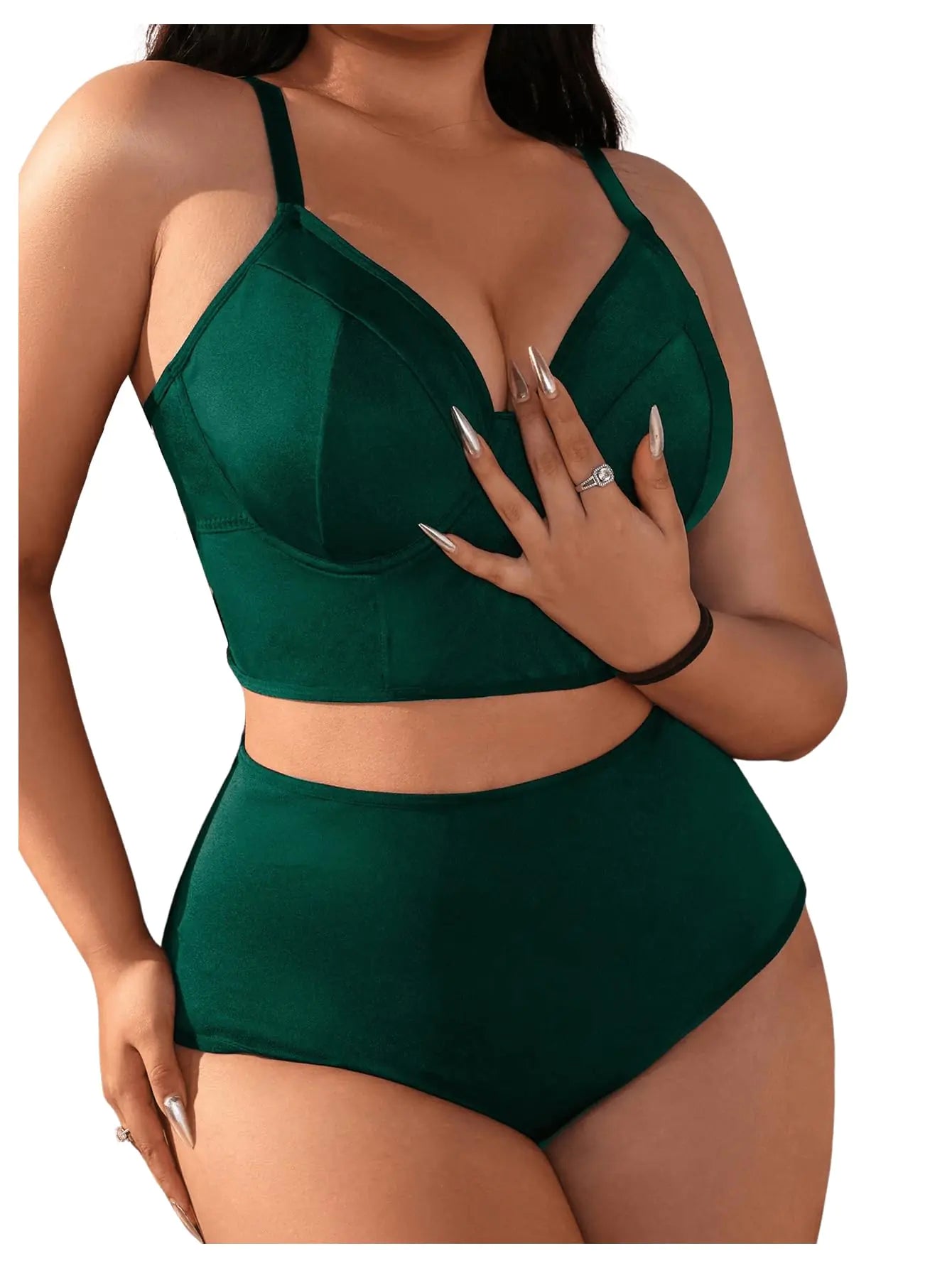
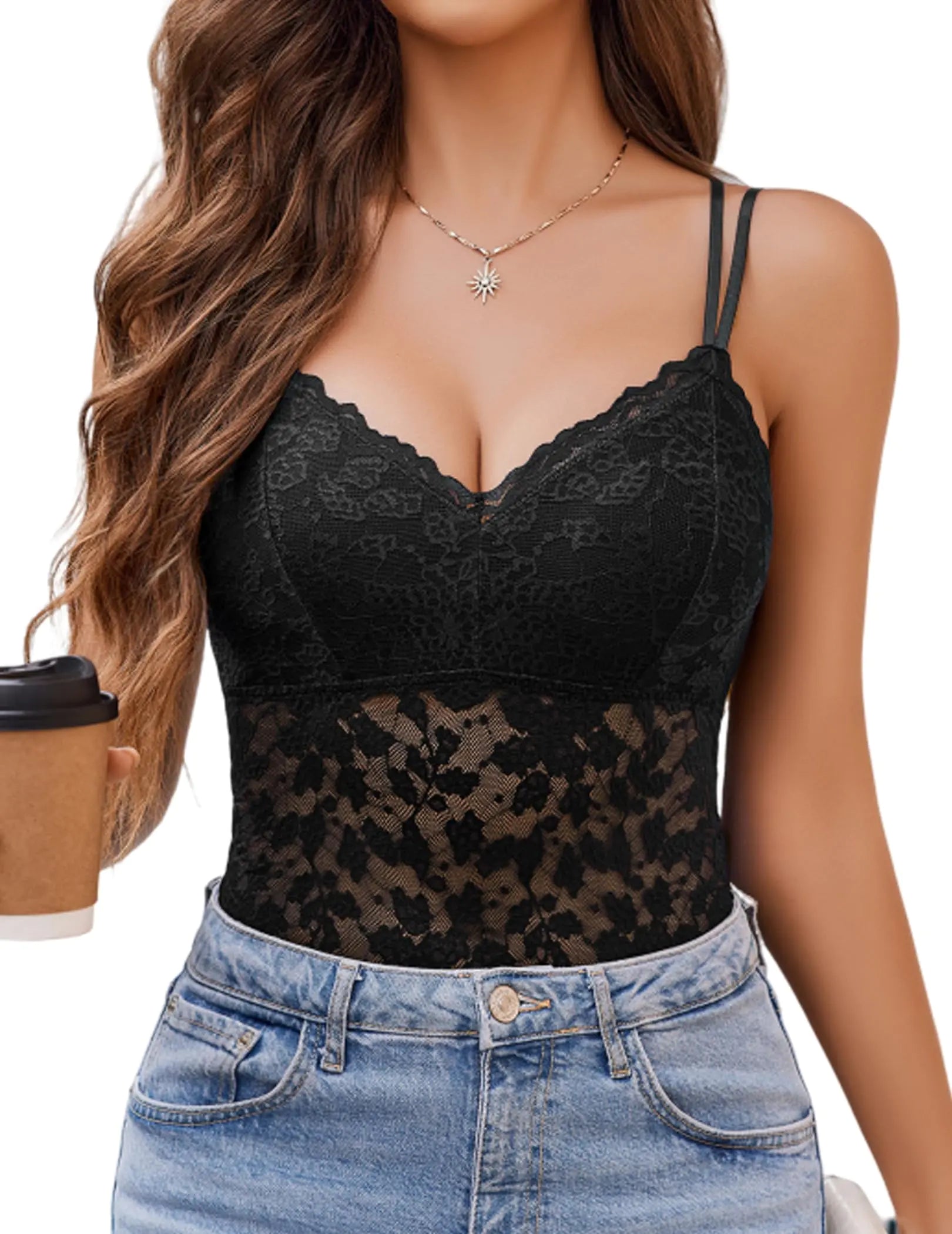
Check each product page's size chart against the numbers from this guide before ordering.
Getting a bra size right takes one tape measure, one mirror, and a willingness to remeasure when something feels off. Lingeriemagic makes the last step easier with inclusive sizing, clear size charts, and durable pieces built for daily wear. Start with the band and bust measurements, then browse the collection to find the fit that matches. Get started with Lingeriemagic and shop lingerie sized for real bodies.
Frequently Asked Questions
What is the most accurate way to measure bra size?
The most accurate method is to measure your underbust (band size) snugly and your bust at the fullest part while wearing an unlined, non-push-up bra. Use a soft tape measure kept level around your body. Subtract your band measurement from your bust measurement to find your cup size. For example, a 34-inch band and 38-inch bust equals a 34D. Repeat the measurement twice to check consistency, and use a bra size calculator as a cross-reference.
Should you measure bra size with or without a bra?
Measure your band size directly against your skin or over a thin, unlined bra for the most accurate result. For your bust measurement, wear an unlined or lightly lined bra that does not add volume. Avoid push-up or padded bras because they distort the bust measurement. If you have very soft breast tissue, wearing a non-push-up bra can help keep the tape in place and give a more repeatable reading.
Why do some bra size guides add 4 inches to the band measurement?
The old +4 method was designed for bras made with stiff, non-stretch fabrics decades ago. Modern bras use elastic materials that stretch, so adding 4 inches often results in a band that is too loose. Most contemporary fitting guides recommend using your actual underbust measurement, rounded to the nearest even number, without adding inches. If you are between sizes, you can round up for comfort or down for a snugger fit.
Can an online bra size calculator give an accurate result?
A bra size calculator can be accurate if you enter precise measurements, but it should be a starting point, not a final verdict. Calculators use the same bust-minus-band formula, so their accuracy depends entirely on how carefully you measure. Different brands also cut sizes differently, so always check the brand's size chart and read fit notes. Use the calculator result as a baseline, then adjust based on how the bra actually feels and supports you.

Lingerie Sets for Wedding Night: 7 Picks Compared
How to Choose the Right Nightgown Size
Related Posts

Best Underwear for Sheer Lace Bodysuits?

How to Choose the Right Nightgown Size

Lingerie Sets for Wedding Night: 7 Picks Compared

Why Choose Sustainable Intimate Apparel: A Practical Buying Guide

How Do You Size a Bra for a Lace Bodysuit?

7 Silk Lingerie Sets for Everyday Wear That Last
