

How to Choose the Right Nightgown Size
Last Updated: November 22, 2026
Quick Summary
To choose the right nightgown size, measure your bust, waist and hips, then compare those numbers to the nightgown size chart on the product page rather than your usual dress size. If your measurements land between sizes, size for your larger area, and size up in woven fabrics with little stretch.
- Measure over light clothing with a soft tape, keeping it level and writing each number down.
- Garment measurements describe the gown, not the body; the gap between the two is the ease.
- If your bust and hips land in different chart rows, size for the larger area.
- A 90 cm gown reads as a short nightie on a tall frame and knee-length on a shorter one.
- Cotton jersey shrinks 3-5% on the first hot wash if not pre-shrunk.
Table of Contents
- Why Nightgown Sizing Is Different From Your Daywear Size
- How to Measure for a Nightgown in Three Steps
- How to Read a Nightgown Size Chart
- Nightgown Length by Height: Getting the Hem Right
- Nightgown Sizing Between Sizes: Which Way to Go
- How Fabric and Cut Change the Fit You Get
- Choosing Your Nightgown at Lingeriemagic
- Frequently Asked Questions
Why Nightgown Sizing Is Different From Your Daywear Size
A nightgown size is not a copy of your dress size.
Daywear is built to hold a shape. A blouse nips at the waist. Jeans grip the hip.
The sizing conversation starts here: read the nightgown size chart for that specific garment, then compare it to your own body measurements.
Three things shift the fit:
- Ease. Sleepwear is cut looser than daywear on purpose.
- Fabric stretch. A stretchy knit forgives a half-size gap. A woven does not.
- Cut and length. A bias-cut slip drapes differently from a straight-cut gown.
So a size 12 in a dress can be a medium in one nightgown and a large in another.
How to Measure for a Nightgown in Three Steps
Learning how to measure for a nightgown takes about five minutes and a soft tape. Measure over light clothing or skin, keep the tape level, and write each number down.
Bust, Waist and Hips: Where the Tape Actually Goes
Bust: wrap the tape around the fullest part of the bust, under the arms, and keep it parallel to the floor.
Waist: find the natural waist, the narrowest point above the belly button and below the ribs.
Hips: measure around the fullest part of the hips, usually 18 to 23 cm below the waist. Stand with feet together.
For a more precise bust reading, this step-by-step bra size measuring guide shows exactly where the tape sits for band and cup.
Reading Garment Measurements Against Your Own
Garment measurements describe the nightgown, not the body. A flat bust width of 48 cm, doubled, means the gown measures 96 cm around the chest. Compare that to your bust measurement.
The gap between the two is the ease. A gown with 5 to 10 cm of ease sits close. One with 15 cm or more feels relaxed. Neither is better; it depends on how you like to sleep.
How to Read a Nightgown Size Chart
A nightgown size chart is a table that pairs body measurements with the size the brand recommends.
Most charts list bust, waist, hips, and sometimes length. Some add weight ranges. Weight is the least reliable column, because two women at the same weight carry it differently.
A quick way to read any chart:
- Find your bust measurement in the body column
- Check whether your hips fall in the same row
- If they land in different rows, size for the larger area
- Note the length column if the gown comes in short, regular, or long
Sizing varies from brand to brand, so always use the chart on the product page.
Nightgown Length by Height: Getting the Hem Right
Nightgown length by height decides whether a gown hits mid-thigh or sweeps the ankle. Two women in the same size can see very different hems.
Height changes where a fixed length lands. A 90 cm gown reads as a short nightie on a tall frame and a knee-length gown on a shorter one.
Use this as a rough guide, then check the product's stated length:
| Your Height | Short Gown | Knee Length | Long Gown |
|---|---|---|---|
| Under 160 cm | Mid-thigh | Just below knee | Near ankle |
| 160-170 cm | Upper thigh | At the knee | Mid-calf |
| Over 170 cm | Upper thigh | Above knee | Below calf |
Measure a gown you already like, from shoulder seam to hem, and match that number. It is the fastest way to repeat a length that works.
Nightgown Sizing Between Sizes: Which Way to Go
When nightgown sizing puts you between sizes, the default advice is to size up for sleepwear. Rest and movement need room, and a gown that is slightly loose feels better than one that binds.
Start with your measurements and the size chart. If your bust and hips land in different rows, size for the larger area, usually the hip for A-line and straight cuts, the bust for cami styles.
Here is how to troubleshoot by body area when you are between sizes:
- Tight bust: If the gown pulls across the chest or the buttons/placket gape, size up. A too-small bust also restricts arm movement and can make the gown ride up at night. If the gown has adjustable straps, you can size up and tighten the straps to keep the neckline in place.
- Pulling at the hips: If the fabric pulls into horizontal wrinkles across the hip or the side seams curve inward, the hip is too small. Size up or switch to an A-line cut, which gives more hip room without adding bust space.
- Slipping straps: If straps slide off your shoulders, the gown may be too large in the bust or the straps may be set too wide for your frame. Adjustable straps solve this; if the gown has fixed straps, a smaller size or a different cut (like a racerback or halter) may fit better.
- Excess length: If the gown is the right size in the body but too long, check whether the product comes in short, regular, or long lengths. If not, hemming a nightgown is straightforward for woven fabrics but trickier for knits. Alternatively, choose a shorter style like a chemise or cami.
A simple decision path:
- Check the fabric. Stretchy knit? Either size can work. Woven? Size for the larger measurement.
- Check the cut. Relaxed or bias-cut? The smaller size may fit. Straight or fitted? Size up if between.
- Check the straps. Adjustable? Size up and tighten if needed.
- Check the hips. If your hips sit in the larger row, size up.
- Still unsure? Size up. A loose gown is easy to live with, and you can always belt it or choose a style with adjustable features.
The one garment where sizing up is clearly right: the plus size sheer lace nightgown with adjustable straps, whose listing notes that the sizing runs smaller than Western standards and advises choosing the larger size between sizes.
How Fabric and Cut Change the Fit You Get
Fabric decides how a nightgown behaves once it is on.
Here is how the most common nightgown fabrics differ in stretch, drape, shrinkage, and the ease they need:
- Cotton jersey: A knit with natural stretch (often 10-25% depending on the blend). It skims the body, breathes well, and shrinks 3-5% on the first hot wash if not pre-shrunk. If you are between sizes in cotton jersey, the smaller size usually works because the knit gives, but pre-wash before deciding.
- Cotton woven (poplin, voile): Little to no stretch. The cut must provide all the ease, so size for your largest measurement, usually the hip, and expect no forgiveness if the chart runs small. These gowns feel crisp and cool but bind if undersized.
- Modal and Tencel: A semi-synthetic knit with excellent drape and moderate stretch (similar to jersey). They tend to shrink less than cotton and feel cooler against the skin. Sizing is usually true to the chart, but modal can relax slightly with wear, so a very close fit may loosen by end of night.
- Satin (polyester or silk): Woven with minimal stretch. Polyester satin has almost no give; silk has a little natural elasticity but not enough to size down. Both show every pull line, so choose a size with at least 5-8 cm of ease through the bust and hip. Satin also snags, so a too-tight fit stresses seams.
Cut matters just as much as fiber:
- Straight cut: Falls in a clean line with less room through the hip. If your hip measurement is your largest, you may need to size up or choose an A-line instead.
- Bias cut: Cut on the diagonal, which gives woven fabrics a slight stretch and a skimming drape. Bias-cut satin or silk can fit closer than the same size in a straight cut, so check the garment's flat measurements rather than assuming your usual size.
- A-line: Widens from the shoulder or chest, giving room through the hip without extra bust space. Good for pear shapes or anyone whose hip measurement is two or more sizes above their bust.
- Cami style: Thin straps and a closer fit through the chest. Adjustable straps help, but if your bust measurement sits at the top of a size range, the cami may pull across the chest, size up or look for a cut with more bust ease.
A practical way to use this: before you buy, note the fabric and cut, then compare the garment's flat measurements (bust width doubled, hip width doubled) to your body measurements. The difference is the ease.
If you are weighing how lace and mesh behave against your own shape, this comparison of lace and mesh nightgowns for comfort shows how each fabric sits in practice. Readers who want to focus on one style can follow this guide to choosing a sheer lace camisole nightgown. And if breathability is the priority, these breathable sleepwear options for women cover fabric choices in more depth.
A practical note on care: check the care label before you size, since fabrics can behave differently when washed.
Choosing Your Nightgown at Lingeriemagic
Fit comes down to three numbers, one chart, and one honest look at how you sleep. Measure your bust, waist, and hips. Compare them to the nightgown size chart on the product page. Then choose the cut and fabric that match the way you move at night.
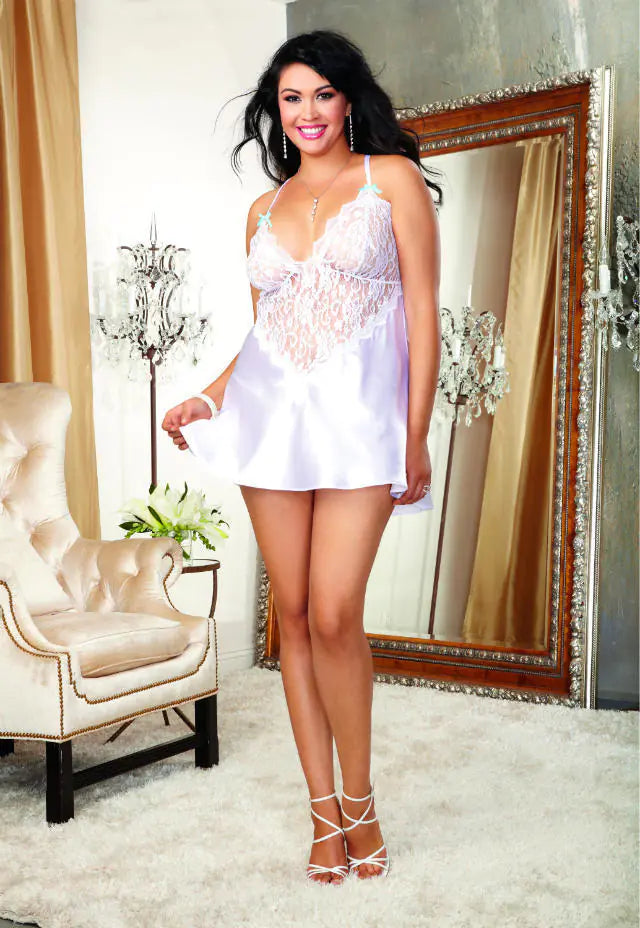
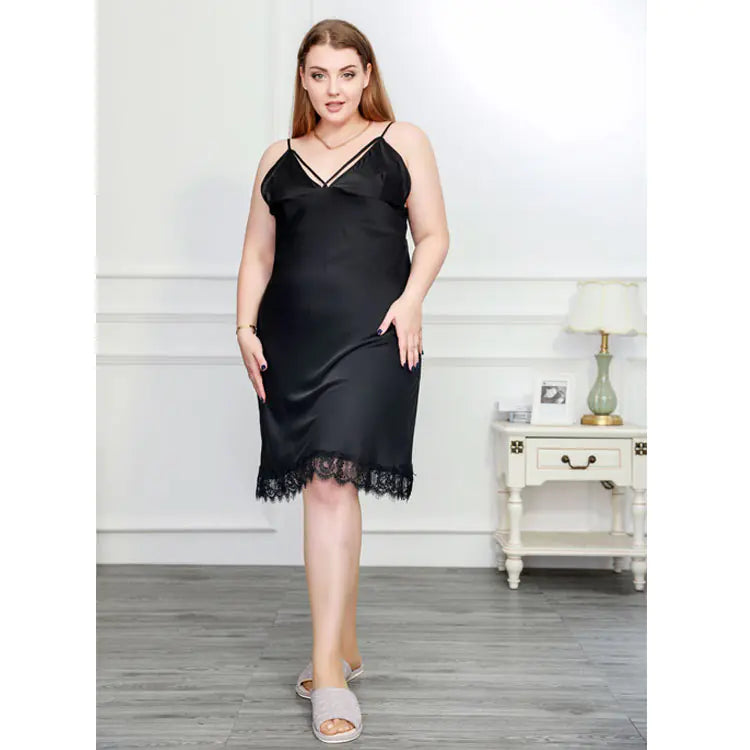
Lingeriemagic builds its sleepwear around comfort and inclusive sizing. The cami nightdress and nightgown comes in soft acrylic across four colors. The plus size lace cami nightgown brings silk and lace in black and wine red.
A nightgown should feel good the moment you put it on and still feel good at 3 a.m. Get the measurements right, and it will.
Getting the size right is the difference between a gown you wear once and one you reach for every night.
Frequently Asked Questions
How should a nightgown fit?
A nightgown should skim your body without pulling across the bust or riding up at the hips. You want enough ease to turn over in bed and lift your arms without the hem climbing. Check three points: the bust should not gape or strain, the straps should stay on your shoulders when you move, and the hem should sit where you expected. If any of those fail, the nightgown size is wrong, not your body.
Should I size up when buying a nightgown?
Size up when you fall between sizes, when the fabric has little stretch, or when the listing says the sizing runs small. Some Lingeriemagic nightgowns note that the sizing runs smaller than Western standards and recommend choosing the larger size if you are between sizes. Size down only if you want a closer fit and the fabric is stretchy, such as spandex mesh.
How does fabric affect nightgown fit?
Fabric decides how much give a nightgown has. Silk and lace hold their shape with little stretch, so the nightgown size chart matters most. Spandex and mesh stretch around curves and forgive a centimetre or two either way. Acrylic is soft and breathable but has limited stretch. Match the fabric to how much fit tolerance you need, and always check whether the care instructions mention shrinkage.
What measurements should I take to choose a nightgown size?
Take three: bust at the fullest part, natural waist at the narrowest point, and hips at the widest point. Add your height so you can judge nightgown length. Measure over light clothing with the tape snug but not tight, and keep it level around your body. Compare those numbers to the nightgown size chart rather than guessing from your dress size.

How to Measure Bra Size Accurately at Home and Online
Best Underwear for Sheer Lace Bodysuits?
Related Posts

Best Underwear for Sheer Lace Bodysuits?

How to Measure Bra Size Accurately at Home and Online

Lingerie Sets for Wedding Night: 7 Picks Compared

Why Choose Sustainable Intimate Apparel: A Practical Buying Guide

How Do You Size a Bra for a Lace Bodysuit?

7 Silk Lingerie Sets for Everyday Wear That Last
