

How to Wash Delicate Intimate Apparel: A 2026 Guide
Table of Contents
- Step 1: Read the Care Label and Sort Your Delicate Intimate Apparel
- Step 2: How to Hand Wash Lingerie Gently
- Step 3: How to Wash Bras on Delicate Cycle
- Step 4: Choosing the Best Detergent for Lingerie
- Step 5: How to Dry Bras and Delicate Garments Safely
- Fabric-Specific Care: Silk, Lace, Microfiber, Modal, and Elastane
- Troubleshooting Stains, Odors, and Detergent Residue
- Hygiene, Wash Frequency, and Water Hardness Tips
- Frequently Asked Questions
Last Updated: October 21, 2026
Step 1: Read the Care Label and Sort Your Delicate Intimate Apparel
The care label is the first thing to check before washing delicate intimate apparel. It tells you the maximum water temperature, whether hand washing or machine washing is safe, and how to dry the item.
Sorting comes next. Keep these groups apart:
- Lace and silk, which snag easily
- Bras with underwire, which can bend out of shape
- Microfiber and modal, which pick up lint
- Shapewear, which loses stretch under heat
A common mistake is tossing everything into one load. A single bra hook can snag lace in the same cycle. Sorting protects fabric and keeps shape retention intact.
Fasten Bra Hooks and Closures Before Washing
Fasten every bra hook and closure before washing. Closed hooks cannot catch on lace, mesh, or other garments. They also keep straps from tangling into knots.
Turn bras inside out to protect the cups. Zip any sleepwear with zippers, and button any closures. This one step adds years to garment lifespan.
Step 2: How to Hand Wash Lingerie Gently
Hand washing is the safest method for silk, lace, and anything with delicate trim. Fill a basin with cold or lukewarm water, add a small amount of gentle detergent, and submerge the garments.
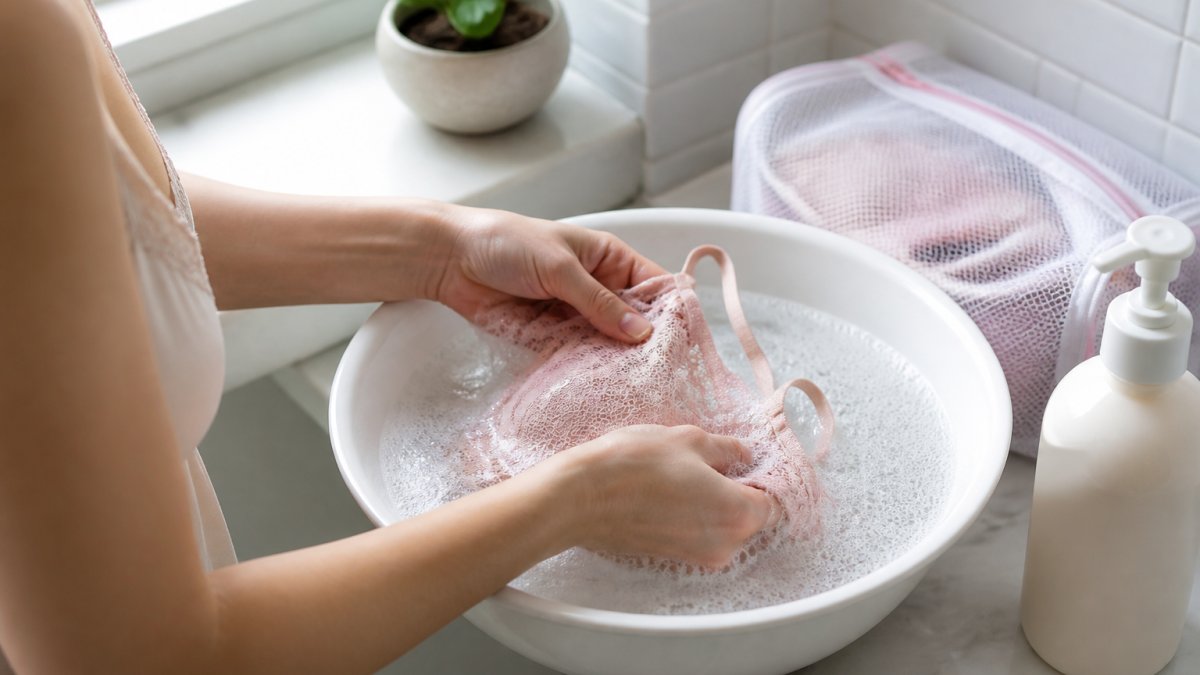
Follow this sequence:
- Check the care label for the water temperature limit
- Fill a clean basin with cool water
- Add a capful of mild detergent and swirl
- Submerge items and soak for 5-10 minutes
- Squeeze water through the fabric without wringing
- Rinse in fresh cool water until suds disappear
- Press water out with a clean towel
Never twist or wring delicate fabrics. Twisting breaks elasticity and distorts shape.
Soak, Agitate Gently, and Rinse Thoroughly
Soaking loosens body oils and sweat without friction. Agitate gently by pressing the fabric down and lifting it, rather than rubbing.
Rinse thoroughly, because leftover detergent residue stiffens lace and irritates skin. Two or three rinses in cool water usually clear it. The International Fabricare Institute care guidance notes that residue is a leading cause of fabric yellowing over time.
Step 3: How to Wash Bras on Delicate Cycle
Machine washing works for bras and sturdy delicate garments when done correctly. Use a delicate or hand-wash cycle, cold water, and a mesh laundry bag. The bag is not optional: it stops hooks from snagging and keeps straps from stretching around the drum.
Set the spin speed to low. A high spin can crush molded cups and warp underwire. Skip the extra rinse unless detergent residue is a known problem.
Use a Mesh Laundry Bag and Cold Water
A fine mesh bag is the single best protector for machine washing. Choose a bag sized to the load: too large and items tumble loose, too small and they stay compressed.
Cold water protects elastane and color. Heat damage from warm or hot water breaks down stretch fibers over time. Wash similar colors together, and never overload the drum.
Step 4: Choosing the Best Detergent for Lingerie
The best detergent for lingerie is a mild, pH-neutral liquid made for delicates. Look for one without bleach, enzymes, or optical brighteners. Those additives strip color and weaken fine fibers.
Match the Detergent to the Fabric
Different fibers react differently to the same detergent. Use this as a working guide:
- Silk: pH-neutral liquid only. Silk is protein-based, and alkaline formulas (including many standard detergents) can dull the sheen and weaken fibers over repeated washes. Avoid enzyme formulas, which are designed to break down protein stains and can attack the silk itself.
- Lace (especially nylon and cotton lace): mild liquid detergent, no bleach. Powder detergents can leave granules trapped in open lacework, so liquid is safer.
- Microfiber and modal: mild liquid detergent is fine; skip fabric softener, which coats the fibers and reduces wicking.
- Elastane blends (bras, shapewear): mild detergent and cool water. Harsh surfactants and heat are the two biggest threats to stretch recovery.
- Period underwear and absorbent garments: mild detergent, no fabric softener, no bleach. Softener and dryer sheets leave a film that blocks absorption.
Dose by Water Hardness, Not Just by Label
Detergent dosing is where most residue and odor problems start. The label dose assumes average water; your household water may not be average.
- Hard water (mineral-heavy, common in many municipal supplies) reduces detergent efficiency. Minerals bind to surfactant and leave deposits that stiffen lace and dull color. If you see white spotting or feel a chalky residue on dried garments, increase the dose slightly or add a water softener.
- Soft water needs less detergent. Using the full label dose in soft water is a common cause of slippery, residue-heavy delicates. Reduce the dose and add an extra rinse if garments feel slick.
A simple test: wash one load at the label dose, dry a piece, and check for stiffness or spotting. Adjust from there rather than guessing.
Hand Wash vs. Machine Dose
For hand washing, use roughly half the recommended dose. A small basin holds far less water than a machine, so the same amount of detergent becomes far more concentrated.
Avoid fabric softener entirely. It coats fibers, reduces breathability, and builds up on lace.
The American Cleaning Institute laundry guidance recommends measuring detergent rather than estimating, since dosing errors drive most residue complaints.
Step 5: How to Dry Bras and Delicate Garments Safely
Air dry every delicate garment. Lay bras flat on a towel, reshape the cups, and let them dry away from direct sunlight. Hang silk and lace on a padded hanger or a drying rack. Never use a tumble dryer for bras, lace, silk, or shapewear. Heat damage shrinks elastic, warps underwire, and yellows white fabrics. If a care label permits low tumble drying, use the lowest heat setting and a mesh bag.
Why Flat Drying Preserves Shape
Gravity and water weight are the enemies of shape retention. A wet bra can hold several times its dry weight in water, and hanging it by the straps pulls that weight through the elastic and the cup seams. Over time, straps stretch out and molded cups lose their curve.
Lay molded-cup bras flat, cup-up, and reshape the cups with your hands while damp. For unlined lace or soft-cup bras, lay them flat or hang from the center gore rather than the straps.
Drying in Small Spaces and on the Go
Not everyone has a drying rack or a sunny balcony. Practical options:
- Towel roll method: lay the garment on a clean dry towel, roll the towel with the garment inside, and press to draw out excess water before laying flat. This cuts drying time significantly and reduces the risk of musty smells.
- Travel: roll damp delicates in a towel, then hang them on a portable travel clothesline or over a hanger in a well-ventilated room. Avoid hotel dryers, which run hot.
- Small apartments: a foldable drying rack over a bathtub or a hanging mesh drying pod works without permanent space. Point a fan at the rack to speed airflow rather than turning up the heat.
Troubleshooting Slow Drying and Musty Smells
If delicates take more than a day to dry or smell musty, the cause is usually airflow, not detergent. Increase air circulation with a fan, dry garments in a room with an open window, and avoid stacking damp items on top of each other. Musty smells on delicates often trace back to garments left damp too long or to detergent residue; rewash with less detergent and dry with better airflow.
Fabric-Specific Care: Silk, Lace, Microfiber, Modal, and Elastane
Each fabric needs slightly different handling. Use this quick reference:
| Fabric | Water Temperature | Wash Method | Drying |
|---|---|---|---|
| Silk | Cold only | Hand wash, no wringing | Lay flat in shade |
| Lace | Cold or lukewarm | Hand wash or mesh bag | Lay flat |
| Microfiber | Cold or lukewarm | Machine delicate cycle | Air dry |
| Modal | Cold | Hand wash or gentle cycle | Lay flat |
| Elastane blends | Cold only | Hand wash preferred | Air dry, never heat |
Silk dislikes alkaline detergent, so choose a pH-neutral formula. Lace snags on hooks and zippers, so always bag it. Microfiber attracts lint, so wash it apart from towels. Modal softens with each wash but weakens under heat. Elastane, the stretch fiber in most bras and shapewear, breaks down fastest in hot water and the tumble dryer.
Troubleshooting Stains, Odors, and Detergent Residue
Most delicate garment problems come from three sources: trapped sweat, leftover detergent, and heat. Fix them before they set.
- Sweat stains: soak in cool water with a mild detergent for 15 minutes, then rinse
- Deodorant marks: dab with a damp cloth and a drop of gentle detergent
- Lingering odor: rewash with less detergent, not more
- Detergent residue: rinse twice in cool water and skip fabric softener
- Yellowing: avoid hot water and direct sun drying
For period underwear and absorbent intimate apparel, rinse in cold water immediately after wear, then wash on a gentle cycle. Never use fabric softener on absorbent fabrics, because it blocks absorption.
Hygiene, Wash Frequency, and Water Hardness Tips
How often should delicate intimate apparel be washed? Bras typically need a wash every two to three wears, while panties and sleepwear should be washed after each wear.
Water hardness affects how well detergent works. Hard water leaves mineral deposits that stiffen lace and dull color.
Hygiene matters as much as frequency. Wash delicates separately from towels and heavy items, and clean the washing machine drum monthly. Store dry garments loosely folded, never compressed, to protect shape retention.
Frequently Asked Questions
How often should you wash bras and delicate intimate apparel?
Bras can usually go 2-3 wears between washes if you rotate them and let them air out. Panties, period underwear, and shapewear should be washed after every wear. Sleepwear and camisoles can stretch to 2-3 wears depending on sweat. Always wash sooner if you notice odor or stretch loss. Rotating several bras extends their lifespan because elastic needs time to recover its shape between wears.
Can you put delicate intimate apparel in the dryer?
Skip the tumble dryer for lace, silk, elastane, and underwired bras. Heat damages elasticity and warpss shape retention. Instead, lay bras flat to dry, hang camisoles and sleepwear, and reshape lace while damp. If you must use a dryer for microfiber or modal, choose the lowest heat setting and remove items while slightly damp. Air drying is the safest way to protect garment lifespan.
What detergent should you use for delicate lingerie?
Choose a gentle, pH-neutral lingerie detergent or a mild detergent free of bleach and enzymes. Avoid fabric softener because it coats fibers and reduces elasticity. For hand washing, a small amount of lingerie-specific wash is enough; for machine washing, use half the recommended dose to prevent residue. If your water is hard, add an extra rinse cycle to remove detergent buildup.
How do you wash lace lingerie without damaging it?
Hand wash lace in cold or lukewarm water with a mild detergent, soak for 5-10 minutes, then agitate gently without twisting or wringing. Rinse thoroughly and press water out with a towel. If machine washing, always use a fine mesh laundry bag and a delicate cycle. Fasten hooks and closures first to prevent snags. Lay flat to dry away from direct heat to keep the lace shape intact.
Caring for delicate intimate apparel takes a few extra minutes, but the payoff is a wardrobe that keeps its shape, color, and stretch. Lingeriemagic designs its lace bralettes, babydolls, and lingerie sets with durable fabrics made to last through gentle care. The Avidlove Lace Bralette, for example, pairs soft nylon-spandex lace with adjustable straps for a comfortable fit wash after wash. Explore the full collection and find pieces worth caring for. Continue Shopping with Lingeriemagic today.
Comfortable Everyday Luxury Intimate Apparel Guide
Everyday Comfort Bras for Small Busts: 4 Styles to Try
Related Posts

Best Lace Bralettes for Narrow Shoulders Tested for Fit

Best Underwear for Sheer Lace Bodysuits?

How to Choose the Right Nightgown Size

How to Measure Bra Size Accurately at Home and Online

Lingerie Sets for Wedding Night: 7 Picks Compared

Why Choose Sustainable Intimate Apparel: A Practical Buying Guide

How Do You Size a Bra for a Lace Bodysuit?
