

Is Bamboo Sleepwear Worth the Price? An Honest Look
Last Updated: October 30, 2026
Quick Summary
Bamboo sleepwear is worth the price for hot sleepers, sensitive skin, and anyone who wears pajamas most nights and will follow cold-wash care. It is not worth it for occasional wear or for shoppers who want a structured, low-maintenance set. The premium pays off when wear frequency is high and care is consistent.
- Bamboo jersey feels buttery-soft and drapes loosely, while cotton holds more structure and resists stretching.
- Bamboo wicks moisture away from skin faster, so hot sleepers wake up dry instead of clammy.
- Wash bamboo in cold water on a gentle cycle and tumble dry on low or air dry flat.
- Cost per wear equals purchase price divided by total wears before replacement.
- A bamboo set worn three nights a week for two years works out to about 312 wears.
Table of Contents
- The Real Reasons Bamboo Sleepwear Costs More
- Bamboo vs Cotton Pajamas: Softness, Breathability and Fit
- Bamboo Pajamas Pros and Cons You Should Know
- Why Bamboo Pajamas for Hot Sleepers Change the Game
- How to Wash Bamboo Pajamas So They Last
- Cost Per Wear: The Number That Decides If It's Worth It
- Finding Your Next Pair at Lingeriemagic
- Frequently Asked Questions
The Real Reasons Bamboo Sleepwear Costs More
Bamboo sleepwear carries a higher price tag than cotton, and the gap is bigger than most shoppers expect. The question of whether bamboo sleepwear is worth the price comes down to three things: how the fabric is made, how long it lasts, and how often you'll actually wear it. This guide breaks down each factor so you can decide with real numbers instead of marketing claims.
The short answer: bamboo earns its premium for hot sleepers, sensitive skin, and anyone who wants a set that survives regular washing. It rarely earns it for occasional wear or for shoppers who prefer crisp, structured fabrics.
What Drives the Higher Price Tag
Three costs separate bamboo from cotton. First, the fiber itself: bamboo cellulose takes more processing to turn into wearable yarn, and that processing is where most of the environmental debate lives. Second, fabric yield: bamboo jersey is often knitted thinner than cotton flannel. Third, the finish: many bamboo sets receive additional finishing treatments that cotton often skips.
A common mistake is assuming the premium is pure branding. In practice, the price difference reflects a more involved supply chain. The US Federal Trade Commission's textile labeling guidance is worth reading before you buy, because "bamboo" on a label does not always mean what shoppers assume. Watch out: some products labeled "bamboo" are actually rayon or viscose, which behave differently in the wash.
Bamboo vs Cotton Pajamas: Softness, Breathability and Fit
Bamboo pajamas tend to feel softer and drape more loosely; cotton pajamas tend to hold more structure. But the difference is mechanical, not just aesthetic, and understanding why helps you judge whether the premium survives real use.
Bamboo jersey feels buttery-soft because the regenerated cellulose fiber is fine and smooth, so it drapes and slides against skin rather than catching. Cotton is a staple fiber with a natural crimp, which gives it structure and a crisper hand.
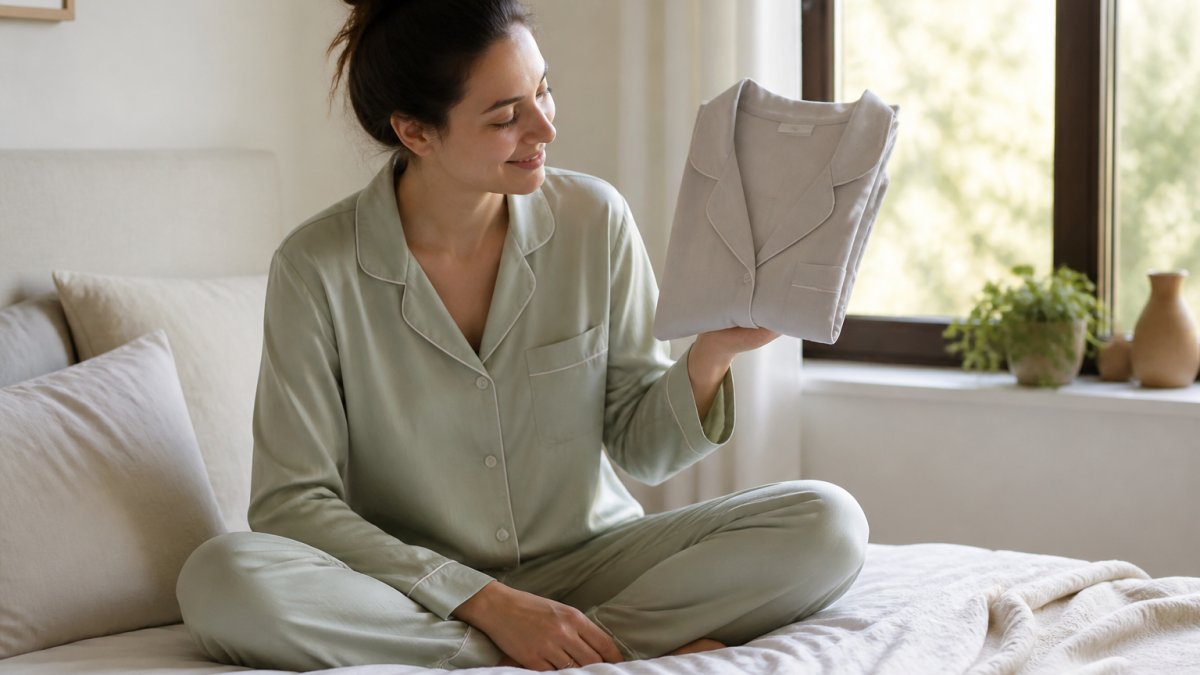
Breathability is closer than many shoppers expect. For readers comparing fabric options in more depth, this guide to breathable sleepwear options for women covers the wider field.
Fit is the sleeper issue. Bamboo stretches with wear and can relax a full size by morning. Cotton stays truer. If you like a snug two-piece set, cotton is the safer bet. If you want room to grow and a relaxed drape, bamboo delivers.
| Factor | Bamboo | Cotton |
|---|---|---|
| Softness | Buttery-soft, fluid drape | Crisp, structured |
| Breathability | High, wicks moisture fast | Moderate, holds moisture |
| Stretch and fit | Stretches, relaxes with wear | Holds shape |
| Shrinkage risk | Moderate without cold wash | Higher in hot water |
| Pilling risk | Higher at friction points without care | Lower, more forgiving |
| Durability | Good with proper care | Good, more forgiving |
| Best for | Hot sleepers, sensitive skin | Structured fit, easy care |
Care failure points decide long-term value. Bamboo is more prone to pilling at underarms and thighs if washed warm or dried hot, and it can shrink without a cold wash. Cotton is more forgiving but can also shrink in hot water. If you will not follow cold-wash, low-heat care, cotton is the lower-risk choice regardless of softness.
Bamboo Pajamas Pros and Cons You Should Know
The bamboo pajamas pros and cons are not symmetrical. The advantages are real and the drawbacks are manageable, but only if you know them before checkout.
Pros:
- Exceptionally soft against skin, which matters for anyone with sensitivity or eczema
- Fast moisture-wicking keeps hot sleepers drier through the night
- Temperature regulation works in both summer and winter as a layering base
- Prints and dyes take well to bamboo, so color holds longer
- Lightweight enough for year-round wear
Cons:
- Higher upfront price than cotton
- Pilling can appear at friction points if you skip care steps
- Shrinkage is a real risk in hot water or a hot dryer
- Stretch means sizing can feel loose after a few wears
- Not all "bamboo" labels mean the same fiber
Practicality decides this one. A bamboo set that gets washed weekly and worn year-round justifies the cost. A set bought for one occasion does not.
Why Bamboo Pajamas for Hot Sleepers Change the Game
For hot sleepers, bamboo pajamas solve the problem cotton creates: trapped moisture. Bamboo fiber wicks sweat away from skin and releases it into the air faster, so you wake up dry instead of clammy.
Temperature regulation is the mechanism. Bamboo is breathable enough to vent heat in summer and works as a light layering base in winter, which is why one set can cover more of the year than a cotton flannel can. The trade-off is warmth: bamboo is not a cold-weather fabric on its own.
If overheating is your main complaint, bamboo is the single best fabric swap you can make. If you sleep cold, cotton flannel still wins.
How to Wash Bamboo Pajamas So They Last
Cold water, mild detergent, and low heat are the three rules that decide whether bamboo pajamas last two years or two months. Follow them and pilling and shrinkage stay minimal.
- Turn the set inside out before washing to reduce surface friction
- Wash in cold water on a gentle cycle
- Use a mild, enzyme-free detergent; harsh formulas break down the fiber
- Skip fabric softener, which coats the fiber and reduces breathability
- Tumble dry on low or air dry flat
- Store folded, not hung, to avoid stretching shoulder seams
For shoppers who want gentler laundry options, this guide to natural alternatives to chemical fabric softeners covers what to use instead. Watch out: hot water and a hot dryer are the two fastest ways to shrink a bamboo set and trigger pilling at the underarms and thighs.
Cost Per Wear: The Number That Decides If It's Worth It
Cost per wear is the purchase price divided by the number of times you wear the item. It is the only honest way to compare a higher-priced bamboo set against a cheaper cotton one, because it forces you to account for how long each set actually stays in rotation.
The formula is simple: Cost per wear = Purchase price ÷ Total wears before replacement. The hard part is estimating total wears honestly. A common pattern among frequent pajama wearers is three to four nights per week, which works out to roughly 150 to 200 wears per year. If a set survives two years of that routine, you are looking at 300 to 400 wears.
Run the math on your own habits using wear counts rather than sticker price:
- A bamboo set worn 3 nights a week for 2 years = about 312 wears. At a higher upfront price, the per-wear figure drops every month the set stays in rotation.
- A cheaper cotton set worn the same schedule but replaced after 12 months = about 156 wears. The lower sticker price is divided by half as many wears, which narrows or erases the gap.
- A bamboo set bought for occasional wear (once a week for a year = 52 wears) rarely beats a budget cotton set on cost per wear, because the premium is spread over too few nights.
The premium only pays off when wear frequency is high and care is consistent. Cold wash and low-heat drying are what protect the wear count; skip them and the shrinkage and pilling described in the care section cut the denominator fast.
Adult sleepwear economics differ from children's. Kids outgrow sleepers before they wear them out, so the cost-per-wear case for premium bamboo is weaker for children unless the set is passed down to a younger sibling. For adults, the set stays in rotation for years, which is where the investment argument holds. If you sleep comfortably in cotton, prefer heavier fabrics, or prioritize low upfront cost, skip the premium and put the savings toward a second cotton set you can rotate.
A practical way to test the claim before committing to a full-price set is to buy one bamboo piece, track how many nights you actually reach for it over a month, and compare that against your current pajama rotation. Wear data beats marketing claims every time.
Finding Your Next Pair at Lingeriemagic
The verdict depends on your sleep habits, not the label. Bamboo sleepwear is worth the price for hot sleepers, sensitive skin, and anyone who wears pajamas most nights and will follow cold-wash care. It is not worth it for occasional wear or for shoppers who want a structured, low-maintenance set.
Lingeriemagic offers a curated selection of sleepwear and intimate apparel, with an inclusive approach to sizing. Browse the sleepwear and night dress selection to compare fabrics and cuts, or explore the plus size sleepwear category if you need extended sizing. Pricing depends on style and fabric, so check the Lingeriemagic website for current prices.
Frequently Asked Questions
Are bamboo pajamas worth the higher price?
It depends on how often you wear them and how much you value comfort. Bamboo sleepwear costs more upfront than basic cotton, but its softness, stretch and moisture-wicking feel often hold up well over repeated washes. If you sleep hot, want a fabric that moves with you, or plan to wear the same set several nights a week, the cost per wear can come out lower than a cheap pair that pills or loses shape within months. For occasional wearers, cotton remains a sensible budget choice.
Do bamboo pajamas keep you cooler than cotton?
For many hot sleepers, yes. Bamboo fabric wicks moisture away from the skin and feels cooler to the touch than standard cotton, which helps reduce that clammy feeling on warm nights. Cotton absorbs moisture but holds it longer, so it can feel damp if you sweat. Breathability also depends on the weave and fit, so look for lighter-weight bamboo sets with a relaxed cut if temperature regulation is your main concern.
How long does bamboo sleepwear last?
With proper care, bamboo sleepwear can hold up well over regular wear. The main threats are heat and friction: hot washes, high dryer settings and rough detergents break down the fibres faster, causing pilling and shrinkage. Wash cold on a gentle cycle, skip the dryer or use low heat, and rotate between a couple of sets. Cheaper bamboo blends tend to pill sooner than denser knits, so construction matters as much as the fibre itself.
How should you wash bamboo pajamas to make them last?
Turn them inside out, wash cold on a gentle cycle with a mild detergent, and avoid fabric softener, which coats the fibres and reduces breathability. Skip the dryer when you can, or use the lowest heat setting, and lay flat or hang to dry. Wash bamboo separately from rough items like jeans or towels to limit friction. Following these steps keeps bamboo sleepwear soft and reduces shrinkage and pilling over time.
The challenge is simple: most shoppers buy pajamas on price and replace them every year. Lingeriemagic takes a different approach, with a curated selection of high-quality sleepwear designed to last, an inclusive size range, and a focus on comfort that holds up to regular washing. Get started with Lingeriemagic and build a sleepwear drawer you won't need to replace next season.

How Do You Style Lingerie for an Apple Body Shape?
Is Luxury Lingerie Worth It for Plus Size? A Real Value Check
Related Posts

Best Underwear for Sheer Lace Bodysuits?

How to Choose the Right Nightgown Size

How to Measure Bra Size Accurately at Home and Online

Lingerie Sets for Wedding Night: 7 Picks Compared

Why Choose Sustainable Intimate Apparel: A Practical Buying Guide

How Do You Size a Bra for a Lace Bodysuit?

7 Silk Lingerie Sets for Everyday Wear That Last
